

The concept of the Goblin, or Dokkaebi, has been a cornerstone of Korean mythology for centuries. Unlike the mischievous or malevolent goblins found in Western folklore, the Korean Dokkaebi is a complex deity-like figure capable of both immense blessing and playful trickery. In recent years, K-Dramas have revitalized this ancient spirit, turning it into a global pop-culture phenomenon that blends romance, tragedy, and the supernatural.
1. The Mythological Origins of the Dokkaebi
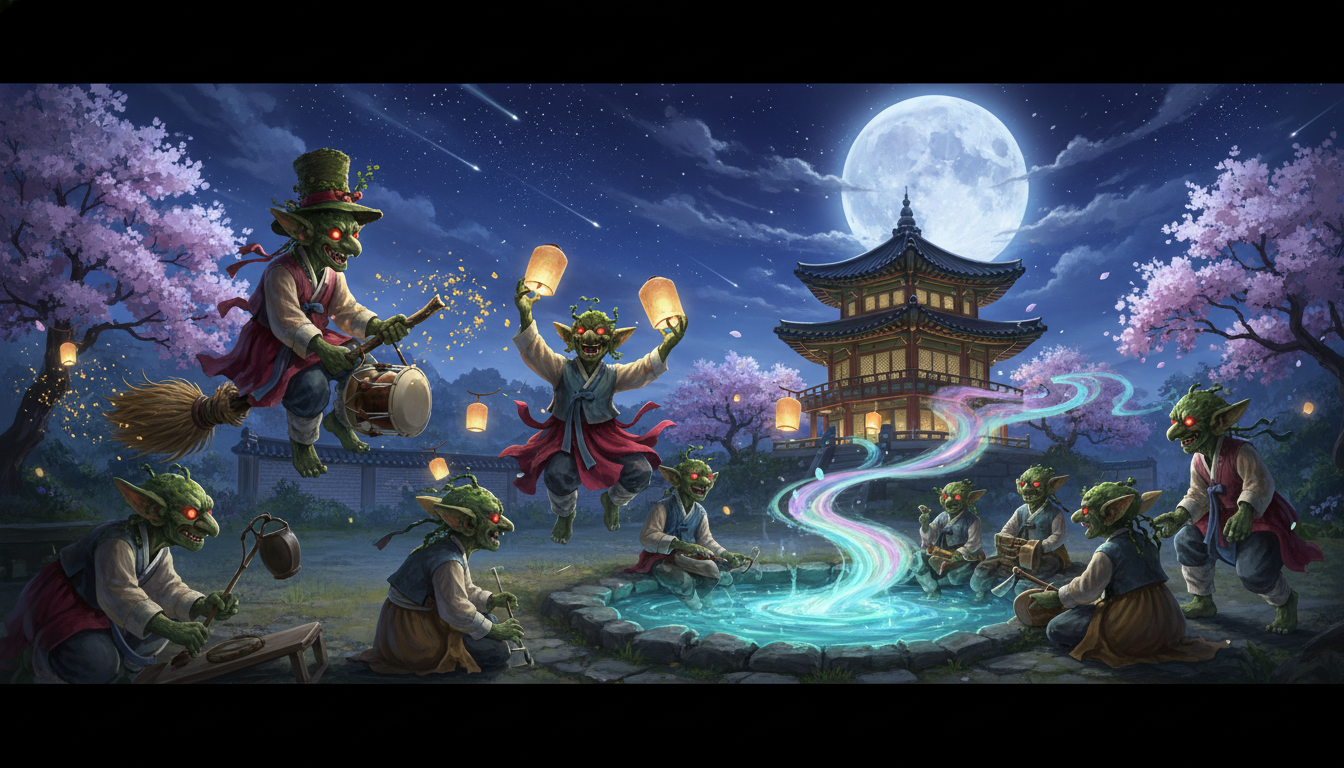
Historically, Dokkaebi are not born but are formed from inanimate objects that have been stained with human blood. Ancient tales suggest that an old broomstick, a weathered cane, or even a discarded shoe could transform into a Goblin after absorbing the essence of human life. This origin story highlights the intrinsic connection between the human world and the spiritual realm in Korean culture.
Unlike ghosts (Gwishin), Dokkaebi are not the spirits of the deceased. They are physical entities with tangible forms, often depicted in old texts as having one leg or being covered in thick fur. However, K-Dramas have significantly ‘beautified’ these creatures, replacing the traditional grotesque features with charismatic, handsome actors to appeal to modern audiences.
Key Folklore Characteristics
Traditional Goblins are known for their love of Ssireum (Korean wrestling). They often challenge travelers to matches, refusing to let them pass until they are defeated. Interestingly, the secret to beating a Dokkaebi in folklore is to push them from the right side, as they are believed to have a weak point there. They are also famously afraid of red beans and tiger skin, elements that are occasionally referenced in modern television adaptations.
2. The ‘Guardian’ Effect: Redefining the Goblin
The 2016 drama Guardian: The Lonely and Great God (often simply called ‘Goblin’) completely transformed the global perception of these creatures. Starring Gong Yoo as Kim Shin, the series introduced a version of the Goblin that was both a powerful warrior and a cursed immortal. This portrayal emphasized the theme of ‘loneliness’—a stark contrast to the boisterous tricksters of ancient legends.
The Symbolism of the Sword
In the drama, the Goblin carries a massive sword through his chest that only his ‘Bride’ can see and remove. This sword represents the burden of his past sins and his glorious victories as a Goryeo general. The concept that only true love can bring the end of immortality added a layer of romantic fatalism that captivated millions of viewers worldwide.
3. 42 Facts About Goblins in K-Drama and Folklore
To understand the depth of this character type, let us explore 42 specific facts that define the Goblin in the K-Drama universe:
- 1. Dokkaebi are considered deities of fortune and can bring wealth to humans.
- 2. They possess a magical club called a Dokkaebi Bangmangi that can summon items out of thin air.
- 3. In K-Dramas, Goblins often have the power to manipulate the weather based on their emotions.
- 4. Rain occurring while the sun is out is traditionally called ‘the Goblin’s wedding day’.
- 5. The Goblin’s bride is the only one who can end his immortality.
- 6. Dokkaebi are known to be extremely fond of buckwheat (Memil).
- 7. They have the ability to teleport through any door they choose.
- 8. Modern K-Drama Goblins are often depicted as high-society fashion icons.
- 9. They can see the future or perceive the souls of the living.
- 10. A Goblin’s blood is said to be a powerful, albeit dangerous, substance.
Continuing the list of facts:
- 11. They often share a complex rivalry with Grim Reapers.
- 12. Goblins in dramas are frequently shown as having lived through multiple historical eras.
- 13. They have a specific weakness for certain household items like red pepper powder in some myths.
- 14. The ‘Goblin’s hat’ (Gamsura) in folklore makes the wearer invisible.
- 15. Unlike Western vampires, they do not fear sunlight.
- 16. They are often depicted as being incredibly wealthy due to their ability to find gold.
- 17. Their mood can cause flowers to bloom in the middle of winter.
- 18. Goblins are fiercely loyal to those who show them genuine kindness.
- 19. They often struggle with the trauma of outliving their human friends.
- 20. The butterfly is often used as a symbol for the Deity that oversees the Goblin.
More intriguing details include:
- 21. The Goblin’s house is usually a blend of traditional and modern architecture.
- 22. They can freeze time for short periods.
- 23. Goblins are known to be ‘simple-minded’ in folklore, often being tricked by clever humans.
- 24. In dramas, they often intervene in human affairs to save lives, despite heavenly rules.
- 25. The blue flame is a common visual representation of a Dokkaebi’s true essence.
- 26. Buckwheat flowers symbolize ‘lovers’ in the context of the Goblin’s story.
- 27. They have a profound connection to the Goryeo Dynasty in many scripts.
- 28. The Goblin’s internal conflict often stems from his desire for death vs. his love for life.
- 29. They are often depicted as having a ‘master-servant’ relationship with a human family for generations.
- 30. Goblins can sense the presence of other supernatural entities instantly.
The final set of facts:
- 31. Their romantic interests are often reincarnations of people from their past.
- 32. Goblins are known to love meat, especially beef.
- 33. They can manifest physical objects like gold bars or jewelry at will.
- 34. The color green is sometimes associated with their supernatural energy.
- 35. They often possess superhuman strength.
- 36. Goblins are sensitive to the ‘coldness’ of Grim Reapers.
- 37. In folklore, they are said to have a ‘pouch’ that never runs out of money.
- 38. They can cross dimensions into the afterlife.
- 39. A Goblin’s anger can cause natural disasters like thunderstorms or earthquakes.
- 40. They are often portrayed as having a childish side despite their age.
- 41. The concept of ‘Saja’ (Grim Reaper) and ‘Dokkaebi’ living together is a modern K-Drama invention.
- 42. Ultimately, the Goblin represents the human desire for immortality and the subsequent realization of its cost.
4. The Evolution of Goblin Fashion
One cannot discuss K-Drama Goblins without mentioning the fashion. In ‘Guardian’, Gong Yoo’s wardrobe consisted of high-end designer coats from brands like Burberry and Lanvin. This ‘Goblin look’—characterized by long trench coats and turtlenecks—became a massive trend across Asia. It signaled a shift in how supernatural beings are presented: no longer as scary monsters, but as aspirational figures of elegance and sophistication.
The Significance of Filming Locations
The use of Quebec City, Canada, as a filming location for the ‘Goblin’ drama added a fairytale-like quality to the narrative. The iconic red door and the Fairmont Le Château Frontenac became pilgrimage sites for fans. This international setting helped bridge the gap between Korean mythology and a global aesthetic, making the story of the Dokkaebi feel universal.
5. The Bromance: Goblin and Grim Reaper
A unique element introduced by modern K-Dramas is the ‘bromance’ between the Goblin and the Grim Reaper. Traditionally, these two would have little to do with each other in folklore. However, the chemistry between Gong Yoo and Lee Dong-wook created a comedic and emotional heart for the story. Their bickering over household chores and their shared existential dread provided a humanizing element to these powerful spirits.
6. Why We Are Obsessed with Goblins
The enduring popularity of the Goblin in K-Dramas lies in the balance of fantasy and humanity. While they possess god-like powers, their struggles are deeply human: they feel loneliness, they seek redemption, and they fall in love. The Dokkaebi serves as a metaphor for the memories we carry and the legacy we leave behind.
Furthermore, the high production value of these dramas, combined with hauntingly beautiful Original Soundtracks (OSTs) like ‘Stay With Me’ by Chanyeol and Punch, creates an immersive experience. The music often mirrors the Goblin’s internal state—melancholic yet hopeful—further cementing the character’s place in the hearts of viewers.
7. Conclusion: The Legacy of the Dokkaebi
From the ancient broomsticks of Korean villages to the high-fashion streets of Seoul and Quebec, the Goblin has traveled a long path. Whether viewed as a bringer of wealth, a wrestling enthusiast, or a lonely guardian waiting for his bride, the Dokkaebi remains one of the most versatile and beloved figures in Asian media. As K-Dramas continue to evolve, we can expect the legend of the Goblin to be reimagined for generations to come, proving that some myths truly are immortal.