



The Korean alphabet, known as Hangeul (한글), is more than just a writing system; it is a profound symbol of Korean identity, innovation, and cultural pride. Unlike most scripts that evolved organically over millennia, Hangeul was a deliberate invention, meticulously crafted with a clear purpose. Its elegant simplicity and scientific structure have earned it praise from linguists worldwide. This article delves into 23 fascinating facts that illuminate the history, design, and cultural impact of this remarkable alphabet, revealing its journey from a royal decree to a cornerstone of the global Korean Wave.
The Royal Creation of a People’s Alphabet
The origin story of Hangeul is unique among the world’s writing systems. It wasn’t the product of slow evolution but a revolutionary project spearheaded by a visionary monarch dedicated to the enlightenment of his people.
1. Invented by a King
Hangeul was created under the direction of King Sejong the Great, the fourth king of the Joseon Dynasty. He personally oversaw its development, which was completed in 1443 and promulgated in 1446. This makes Hangeul one of the very few writing systems in the world with a known inventor and a precise creation date.
2. Its Original Name Was Hunminjeongeum
The script was first introduced to the world in a document titled Hunminjeongeum (훈민정음), which translates to “The Proper Sounds for the Instruction of the People.” The alphabet itself was also called by this name. The term ‘Hangeul,’ meaning ‘Great Script’ or ‘Korean Script,’ was coined in the early 20th century by linguist Ju Si-gyeong.
3. Created to Combat Illiteracy
Before Hangeul, Koreans used classical Chinese characters (Hanja) for writing. This system was incredibly complex and accessible only to the highly educated male elite. King Sejong was deeply concerned that common people, unable to read or write, could not express their grievances or understand the law. Hangeul was created as a simple, logical script that anyone could learn, empowering the entire population with literacy.
4. Faced Fierce Opposition from the Elite
The scholarly elite, who derived their status from their mastery of complex Chinese characters, strongly opposed the new alphabet. They saw it as a threat to their power and a debasement of culture, viewing Hanja as the only legitimate form of writing. Despite this resistance, King Sejong’s will prevailed.
The Scientific and Philosophical Design
Hangeul is often called the world’s most scientific alphabet. Its design is not arbitrary but deeply rooted in phonetics and philosophy, reflecting a profound understanding of language and the cosmos.
5. Consonants Mimic the Articulatory Organs
The genius of Hangeul is immediately apparent in its consonant shapes. They are designed to visually represent the shape of the mouth, tongue, and throat when making that sound. For example:
- ‘ㄱ’ (g/k) represents the shape of the tongue’s root blocking the throat.
- ‘ㄴ’ (n) depicts the shape of the tongue touching the upper gums.
- ‘ㅁ’ (m) outlines the shape of the closed mouth.
- ‘ㅅ’ (s) illustrates the shape of the teeth.
- ‘ㅇ’ (ng/silent) represents the shape of the open throat.
6. Vowels Embody Philosophical Principles
The basic vowel characters are based on the Taoist philosophy of the three realms of the cosmos:
- ‘ㆍ’ (a dot, now obsolete but merged into other vowels) represents Heaven (a round sky).
- ‘ㅡ’ (eu) represents Earth (a flat horizon).
- ‘ㅣ’ (i) represents Humanity (a person standing upright).
All other vowels are combinations of these three fundamental elements.
7. It’s a Featural Alphabet
Linguists classify Hangeul as a ‘featural’ writing system. This means that the shapes of the letters encode phonological features of the sounds they represent. For example, adding a stroke to a basic consonant often signifies a more aspirated or ‘stronger’ sound (e.g., ‘ㄱ’ becomes ‘ㅋ’ ).
8. Letters are Grouped into Syllabic Blocks
Unlike English, where letters are written sequentially, Hangeul letters are grouped into square syllabic blocks. Each block contains at least one consonant and one vowel, forming a single syllable. For example, the letters ㅎ (h), ㅏ (a), ㄴ (n) combine to form the block ‘한’ (han).
Hangeul’s Tumultuous Journey Through History
Despite its brilliant design, Hangeul’s path to becoming the official script of Korea was long and fraught with challenges, including suppression and its eventual embrace as a symbol of national identity.
9. It Was Once Derisively Called ‘Amgeul’ (Women’s Script)
The male-dominated elite continued to favor Hanja for centuries, dismissing Hangeul as inferior. Because it was widely adopted by women and commoners who were excluded from formal education, it was often pejoratively called ‘Amgeul’ (암글), meaning ‘women’s script’.
10. A Symbol of Nationalism During Japanese Occupation
During the Japanese colonial period (1910-1945), the Japanese administration suppressed the Korean language and mandated the use of Japanese. Hangeul became a powerful symbol of Korean resistance and cultural identity. Scholars worked in secret to preserve and standardize the script, ensuring its survival.
11. Hangeul Day is a National Holiday
South Korea celebrates the invention of its alphabet on October 9th with a national holiday called Hangeul Day. It’s a day of national pride, with ceremonies and events celebrating Korean language and culture. North Korea celebrates the same occasion on January 15th, calling it Chosŏn’gŭl Day.
12. North and South Korea Use It Differently
While both North and South Korea use Hangeul as their official script, decades of separation have led to minor differences in spelling, pronunciation, vocabulary, and even the alphabetical order of some letters.
Hangeul in the Modern World
Today, Hangeul is a cornerstone of modern Korean society and a key driver of its global cultural influence. Its efficiency and elegance make it perfectly suited for the 21st century.
13. It’s One of the Easiest Alphabets to Learn
The original proclamation, the Hunminjeongeum Haerye, famously stated, “A wise man can acquaint himself with them before the morning is over; a stupid man can learn them in the space of ten days.” This holds true today, as many learners of Korean are astonished by how quickly they can learn to read and write Hangeul.
14. It Contributes to an Extremely High Literacy Rate
Thanks to the simplicity and accessibility of Hangeul, South Korea boasts one of the highest literacy rates in the world, consistently ranking at over 99%. This is a direct fulfillment of King Sejong’s original vision.
15. Perfectly Suited for the Digital Age
The systematic nature of Hangeul, with its clear distinction between consonants and vowels, makes it incredibly efficient for typing on keyboards and mobile devices. This has been a significant factor in South Korea’s rise as a global technology powerhouse.
16. A Key Component of the Korean Wave (Hallyu)
The global popularity of K-Pop, K-Dramas, and Korean cinema has sparked a massive international interest in learning the Korean language. The accessibility of Hangeul provides a welcoming gateway for fans worldwide to connect more deeply with the culture.
17. Hangeul Calligraphy is a Respected Art Form
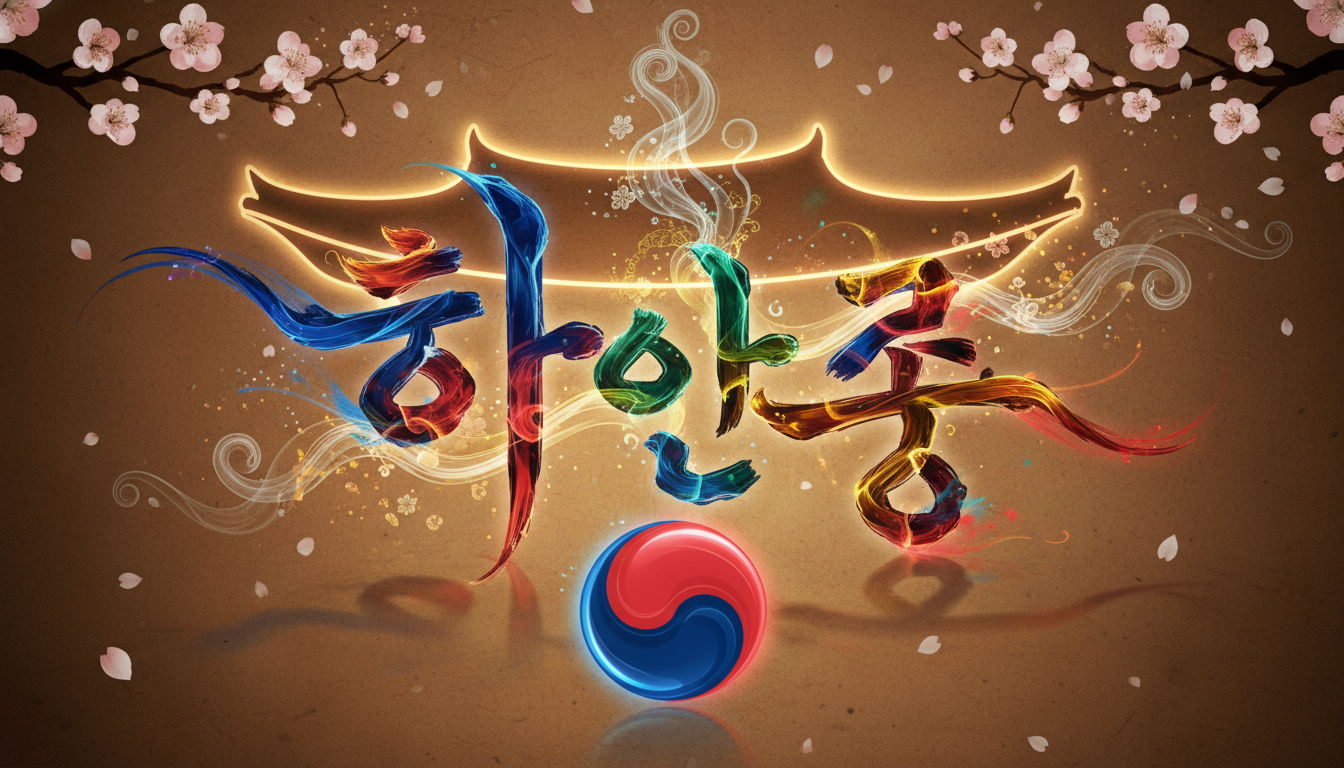
The aesthetic beauty of Hangeul’s lines and shapes has given rise to a vibrant tradition of calligraphy (서예, Seoye). Artists use the script’s geometric and fluid forms to create stunning works of art that convey both meaning and emotion.
Lesser-Known & Intriguing Facts
Beyond its primary history and function, Hangeul has many other interesting facets that highlight its unique character.
18. Some Original Letters Are Now Obsolete
The original alphabet had 28 letters, but four have fallen out of use over the centuries as the sounds they represented disappeared from the Korean language. These include the vowel ‘ㆍ’ (arae-a) and three consonants.
19. It Has Been Adopted by a Foreign Tribe
In a fascinating modern application, the Cia-Cia tribe in Bau-Bau, Indonesia, officially adopted Hangeul in 2009 to write their native language, which had no existing writing system. They chose Hangeul for its simplicity and ability to accurately represent their spoken sounds.
20. The Alphabetical Order is Logical
The ‘ganada’ (가나다) order of the Korean alphabet is not random. It is based on the phonetic principles of the consonants’ creation, starting with the softest sounds and progressing through related sounds made in the same part of the mouth.
21. Hangeul is a UNESCO Memory of the World Register Treasure
In 1997, the Hunminjeongeum Haerye, the original manuscript explaining the new script’s design and philosophy, was added to the UNESCO Memory of the World Register in recognition of its global linguistic importance.
22. There’s a Hangeul Museum
Located in Seoul, the National Hangeul Museum is dedicated entirely to the history and evolution of the Korean alphabet. It showcases the script’s cultural and technological journey, celebrating its past and future.
23. It’s Praised by International Scholars
Numerous linguists and scholars have lauded Hangeul. The late British historian and linguist Geoffrey Sampson described it as “one of the great intellectual achievements of humankind.” Its logical structure and ease of learning continue to be a subject of academic admiration.
In conclusion, Hangeul is far more than a set of letters. It is a testament to a king’s love for his people, a masterpiece of linguistic science, a symbol of national resilience, and a vibrant vehicle for a culture that has captivated the world. Each syllabic block written in Hangeul carries with it a legacy of ingenuity and the enduring spirit of the Korean people.