


The Vibrant World of Korean Street Food
Korean street food, known as Gilsang-eumsik, is more than just a quick meal; it is a vital part of the nation’s cultural identity. From the neon-lit alleys of Myeongdong to the traditional stalls of Gwangjang Market, these snacks offer a window into the history and soul of South Korea. Today, we explore 58 fascinating facts that define this culinary phenomenon.
The Historical Evolution
Korean street food has humble beginnings. Many iconic dishes emerged during the post-Korean War era when resources were scarce.
- Fact 1: Tteokbokki was originally a non-spicy royal court dish.
- Fact 2: The spicy red version we love today only became popular in the 1950s.
- Fact 3: Street food stalls provided affordable nutrition during the rapid industrialization of the 1960s.
- Fact 4: Pojangmacha (tented wagons) first appeared in the early 20th century.
The Cultural Icon: Pojangmacha
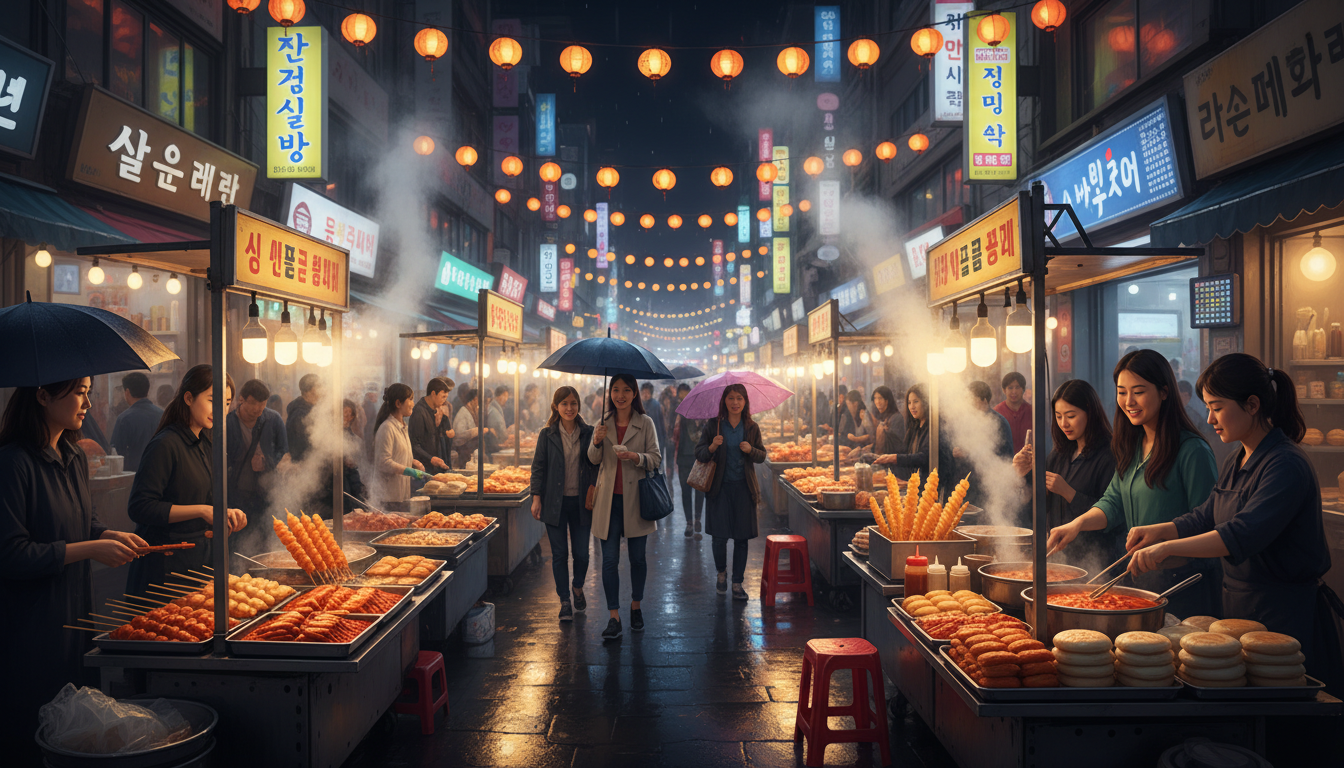
The Pojangmacha, or ‘tented wagon,’ is a staple of Korean nightlife. These orange-tented stalls serve as community hubs where locals unwind after work.
- Fact 5: These stalls are often found near subway exits or busy intersections.
- Fact 6: They are famous for serving ‘Anju’ (side dishes meant to be eaten with alcohol).
- Fact 7: In the past, they were primarily for drinking, but now they are family-friendly food spots.
- Fact 8: Many Pojangmachas do not have formal menus; you simply point at what looks good.
The King of Street Food: Tteokbokki
No discussion of Korean street food is complete without mentioning Tteokbokki (spicy rice cakes).
- Fact 9: The chewy texture is known as ‘쫀득쫀득’ (jjon-deuk-jjon-deuk) in Korean.
- Fact 10: There are over 20 different variations of Tteokbokki across the country.
- Fact 11: ‘Gungjung Tteokbokki’ is the soy-sauce based version once served to kings.
- Fact 12: Sindang-dong in Seoul is a famous district dedicated entirely to Tteokbokki.
Winter Warmers: Odeng and Bungeoppang
As temperatures drop, street food stalls pivot to seasonal favorites that provide warmth and comfort.
- Fact 13: Odeng (fish cake) skewers are often served with free, unlimited broth.
- Fact 14: The broth is usually made from dried anchovies, kelp, and radish.
- Fact 15: Bungeoppang is a fish-shaped pastry filled with sweet red bean paste.
- Fact 16: Despite its fish shape, it contains no actual fish.
- Fact 17: The shape symbolizes good luck and prosperity.
- Fact 18: A popular variation is ‘Gyeran-ppang,’ or egg bread, which is sweet and savory.
Sweet Treats and Desserts
Korean street food also caters to those with a sweet tooth. Hotteok and Dalgona are legendary examples.
- Fact 19: Hotteok is a pancake filled with brown sugar, cinnamon, and nuts.
- Fact 20: It originated from Chinese immigrants in the late 19th century.
- Fact 21: Dalgona, a honeycomb toffee, gained global fame through the series ‘Squid Game.’
- Fact 22: Street vendors often give a free Dalgona if you can carve out the shape perfectly.
- Fact 23: ‘Kkwabaegi’ are twisted donuts that are exceptionally fluffy and coated in sugar.
The Rise of Fusion Street Food
Modern Korean street food is characterized by creative fusion and ‘Instagrammable’ aesthetics.
- Fact 24: The ‘Korean Corn Dog’ is coated in sugar and often filled with mozzarella cheese.
- Fact 25: Some corn dogs are even crusted with potato cubes or ramen noodles.
- Fact 26: ‘Tornado Potato’ (Hwaeori Gamja) was invented in Seoul in 2002.
- Fact 27: Cheese is a relatively recent addition to street food, reflecting Western influence.
- Fact 28: ‘Gilgeori Toast’ is a sweet and savory egg sandwich popular for breakfast.
Etiquette and Social Norms
Eating on the street in Korea has its own set of unwritten rules.
- Fact 29: Most people stand and eat right at the stall.
- Fact 30: Double-dipping your skewer in the communal sauce is a major social faux pas.
- Fact 31: It is common to pay with cash or via quick bank transfer at smaller stalls.
- Fact 32: Vendors often give ‘Service’ (free extra food) to regular customers.
- Fact 33: Trash should be returned to the vendor or disposed of in designated bins.
The Role of Markets: Gwangjang and Beyond
Traditional markets are the heart of the street food scene.
- Fact 34: Gwangjang Market is over 100 years old.
- Fact 35: It is famous for ‘Mayak Gimbap,’ which translates to ‘narcotic gimbap’ because it is so addictive.
- Fact 36: ‘Bindaetteok’ (mung bean pancakes) are a specialty of Gwangjang.
- Fact 37: Myeongdong is the most famous spot for tourists to find modern, trendy snacks.
- Fact 38: Namdaemun Market is known for its ‘Hotteok Alley.’
Regional Varieties and Unique Ingredients
Street food isn’t just a Seoul phenomenon; every province has its own flavor.
- Fact 39: Busan is famous for ‘Ssiat Hotteok,’ which is packed with seeds.
- Fact 40: Jeju Island is known for street snacks made with Hallabong oranges.
- Fact 41: ‘Sundae’ (blood sausage) is a common street food, often served with salt or chili paste.
- Fact 42: In some regions, Sundae is eaten with ‘Chogochujang’ (vinegared chili paste).
- Fact 43: ‘Dakkochi’ (grilled chicken skewers) are a favorite among students.
Global Influence and the ‘K-Food’ Wave
Thanks to the Hallyu (Korean Wave), street food has become a global export.
- Fact 44: Mukbang creators have popularized street food to millions of viewers worldwide.
- Fact 45: K-Dramas often feature scenes of protagonists eating at a Pojangmacha to evoke emotion.
- Fact 46: Korean street food festivals are now held in major cities like New York and London.
- Fact 47: The ‘Spicy Noodle Challenge’ started as a street food trend.
- Fact 48: Many street food recipes are now being adapted into high-end restaurant dishes.
Health and Modern Trends
As health consciousness grows, street food is also evolving.
- Fact 49: There is a rising trend of vegan street food options in Seoul.
- Fact 50: Food safety regulations for street vendors have significantly tightened since 2010.
- Fact 51: Many vendors now use eco-friendly packaging.
- Fact 52: ‘Cup-bap’ (rice in a cup) started as a quick meal for students studying for exams.
- Fact 53: Street food is a major contributor to Korea’s tourism economy.
Final Interesting Tidbits
To round out our list, here are the final fascinating facts about this culinary world.
- Fact 54: Some street food vendors are legendary and have been in the same spot for 40 years.
- Fact 55: The smell of roasted chestnuts and sweet potatoes is a sign that winter has arrived in Korea.
- Fact 56: ‘Mandu’ (dumplings) are a popular street food that varies from steamed to fried.
- Fact 57: Street food is often the first thing Koreans miss when they travel abroad.
- Fact 58: The ‘Street Food’ episode of Netflix featured the famous Kal-guksu lady from Gwangjang Market.
Conclusion
Korean street food is a dynamic, ever-changing landscape that reflects the resilience and creativity of the Korean people. Whether you are a fan of the spicy, the sweet, or the savory, there is something in the street food stalls of Korea for everyone to enjoy. It remains a cornerstone of the Korean cultural experience, inviting everyone to take a bite of history.