


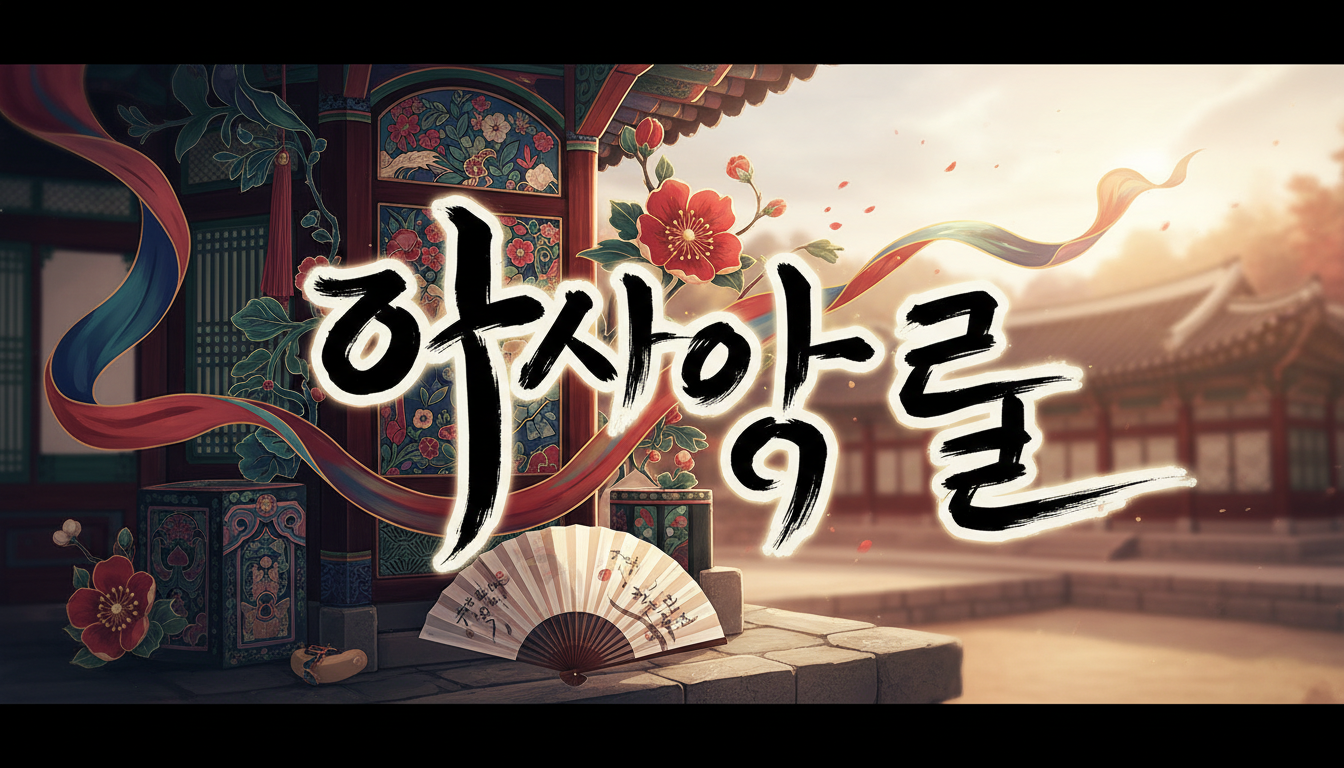
The Korean alphabet, known as Hangeul, is more than just a system of writing; it is a symbol of national identity, a scientific marvel, and a testament to the forward-thinking leadership of the Joseon Dynasty. Unlike most alphabets in the world, which evolved over centuries from pictographs or borrowed scripts, Hangeul was deliberately invented with a specific purpose: to boost literacy among the common people. Today, it stands as one of the most efficient and logical writing systems globally.
In the world of Korean culture, Hangeul influences everything from calligraphy and typography to digital technology and fashion. To truly appreciate the depth of this script, we have compiled a comprehensive list of 53 fascinating facts that cover its history, linguistic structure, and modern cultural significance.
The Historical Origins of Hangeul
To understand Hangeul, one must first understand the era of its creation. Before the 15th century, Koreans used Classical Chinese characters (Hanja) to write. This system was complex and ill-suited for the Korean spoken language, leaving the majority of the population illiterate. This disparity led to the birth of the alphabet we know today.
Key Historical Facts (1-10)
- 1. Invention Date: Hangeul was created in 1443 by King Sejong the Great.
- 2. Promulgation: It was officially published in 1446 under the title Hunminjeongeum.
- 3. The Meaning: Hunminjeongeum translates to "The Correct Sounds for the Instruction of the People."
- 4. The Inventor: Unlike many scripts with unknown origins, Hangeul is the only alphabet in the world where the inventor and date of creation are known.
- 5. The Hall of Worthies: King Sejong worked with scholars from the Jiphyeonjeon (Hall of Worthies), though records suggest he personally led the project.
- 6. Elite Opposition: The scholar aristocracy (Yangban) fiercely opposed Hangeul, claiming that abandoning Hanja was barbaric.
- 7. The Ban: In 1504, King Yeonsangun banned the study and usage of Hangeul after commoners used it to write posters mocking him.
- 8. Revival: It wasn’t until 1894, during the Gabo Reform, that Hangeul was adopted for official documents.
- 9. The Name "Hangeul": The term was coined in 1912 by the linguist Ju Si-gyeong; it means "Great Script" or "Korean Script."
- 10. UNESCO Recognition: The Hunminjeongeum Haerye (the explanation manuscript) is a UNESCO Memory of the World registered heritage.
The Scientific Design and Structure
What makes Hangeul truly unique in the linguistic world is its scientific design. It is a featural alphabet, meaning the shapes of the letters are not arbitrary but are based on the physical articulation of sounds.
Linguistic and Structural Facts (11-25)
- 11. Mimicking the Mouth: The basic consonants were designed to resemble the shape of the speech organs (tongue, palate, teeth, and throat) when pronouncing them.
- 12. Vowel Philosophy: The vowels are based on three philosophical elements: Heaven (a dot), Earth (a flat line), and Man (a standing line).
- 13. Original Count: Originally, there were 28 letters; today, there are 24 basic letters (14 consonants and 10 vowels).
- 14. Lost Letters: Four letters (such as arae-a) have become obsolete in modern standard Korean.
- 15. Syllabic Blocks: Unlike the linear English alphabet, Hangeul letters are grouped into blocks that form syllables.
- 16. Mathematical Combinations: These blocks allow for 11,172 mathematically possible syllable combinations.
- 17. Easy to Learn: A famous saying states, "A wise man can acquaint himself with them before the morning is over; a stupid man can learn them in the space of ten days."
- 18. Featural System: Adding a stroke to a base letter often represents a stronger or more aspirated sound (e.g., ¬ ‘g’ becomes &ㅋ ‘k’).
- 19. No Tones: Unlike Chinese or Vietnamese, modern Korean is not tonal, making the script easier to transliterate.
- 20. Left to Right: While originally written in vertical columns from right to left, modern Hangeul is written horizontally from left to right.
- 21. Agglutinative Language: The script supports Korean grammar perfectly, where particles are attached to words to denote function.
- 22. Jamo: The individual letters are called jamo.
- 23. Batchim: This refers to the final consonant in a syllable block, which is unique to Korean phonology.
- 24. Sound-Centered: It is a phonemic alphabet, meaning it focuses purely on sound rather than meaning (ideograms).
- 25. Most Scientific: Linguists often cite Hangeul as the most scientific writing system ever designed due to its logical evolution.
Cultural Impact and Modern Usage
Hangeul has transcended its role as a communication tool to become a cultural icon. It represents Korean independence and resilience, especially following the Japanese occupation in the early 20th century. Today, it is a source of immense national pride.
Cultural and Social Facts (26-40)
- 26. Hangeul Day: Celebrated on October 9th in South Korea to commemorate the promulgation of the script.
- 27. Chosun-gul Day: North Korea celebrates the script on January 15th and calls it Chosun-gul.
- 28. Literacy Rate: Thanks to Hangeul, South Korea has one of the highest literacy rates in the world, near 100%.
- 29. UNESCO Prize: The "UNESCO King Sejong Literacy Prize" is awarded annually to groups promoting literacy globally.
- 30. Calligraphy: Seoye (Korean calligraphy) is a revered art form, with Hangeul offering a distinct aesthetic compared to Chinese characters.
- 31. Typography: Modern designers constantly reinvent Hangeul fonts, creating a booming industry in typography.
- 32. Fashion: Famous designers have incorporated Hangeul characters into high-fashion clothing lines.
- 33. The Mal-moi Movement: During Japanese colonial rule, scholars risked their lives to compile the first Korean dictionary to preserve the language.
- 34. Derogatory Names: Before the 20th century, elites called it Amkul (women’s script) or Ahaekul (children’s script) to dismiss its value.
- 35. Statue: A massive golden statue of King Sejong sits in Gwanghwamun Square, Seoul, holding a book of Hangeul.
- 36. National Museum: Seoul houses the National Hangeul Museum, dedicated entirely to the history and future of the alphabet.
- 37. Cia-Cia Tribe: An Indonesian tribe, the Cia-Cia, adopted Hangeul to write their own spoken language because they lacked a script.
- 38. Digital Age: Hangeul is considered one of the most efficient scripts for digital typing due to its logical keyboard layout.
- 39. Texting Slang: Koreans often text using only consonants (e.g., "&u314b&u314b" for laughter) for speed.
- 40. Romanization: The Revised Romanization of Korean (2000) is the official system for writing Hangeul in English characters.
Fun Trivia and Global Reach
As Korean culture (Hallyu) spreads globally, interest in Hangeul has skyrocketed. It is no longer just for Koreans; it is a global script learned by millions of fans and students.
Obscure and Fun Facts (41-53)
- 41. Circle Shape: The circle letter (&u3147) acts as a placeholder when a syllable starts with a vowel but is pronounced ‘ng’ at the end.
- 42. Stroke Order: Like Chinese, Hangeul has a strict stroke order that must be followed for correct handwriting.
- 43. Spacing: Unlike Japanese or Chinese, modern Korean uses spaces between words, a concept adopted from Western punctuation.
- 44. Vertical Keys: On smartphones, the "Cheonjiin" keyboard layout allows typing with minimal keys based on the dot, line, and standing man theory.
- 45. Aesthetics: Architects have designed buildings inspired by the geometric shapes of Hangeul letters.
- 46. First Novel: Hong Gildong Jeon is famously known as the first novel written entirely in Hangeul.
- 47. Bible Translation: The translation of the Bible into Hangeul played a massive role in spreading the script among commoners in the 19th century.
- 48. Silent Letters: While phonetic, some complex consonant clusters at the bottom of blocks have silent components depending on the following syllable.
- 49. Double Consonants: There are five "tense" consonants (&u3138, &u3149, &u3132, &u3146, &u3143) that sound like a harder, stressed version of their single counterparts.
- 50. No ‘F’ or ‘V’: Hangeul does not have native letters for ‘F’, ‘V’, or ‘Z’, often requiring substitution sounds for foreign words.
- 51. Loanwords: Hangeul is incredibly adaptable and can transcribe almost any sound from English or other languages (Konglish).
- 52. Global Institutes: The King Sejong Institute is a government-funded organization with branches worldwide teaching Hangeul.
- 53. A Living Script: Hangeul continues to evolve, with new slang and abbreviations being created by the younger generation every day.
Conclusion
The story of Hangeul is one of innovation, struggle, and ultimate triumph. From its inception in the mind of a benevolent King to its status as a digital powerhouse, these 53 facts only scratch the surface of its significance. For anyone interested in Korean culture, learning Hangeul is the first and most rewarding step toward understanding the heart of Korea.