
The Timeless Elegance of the Hanbok
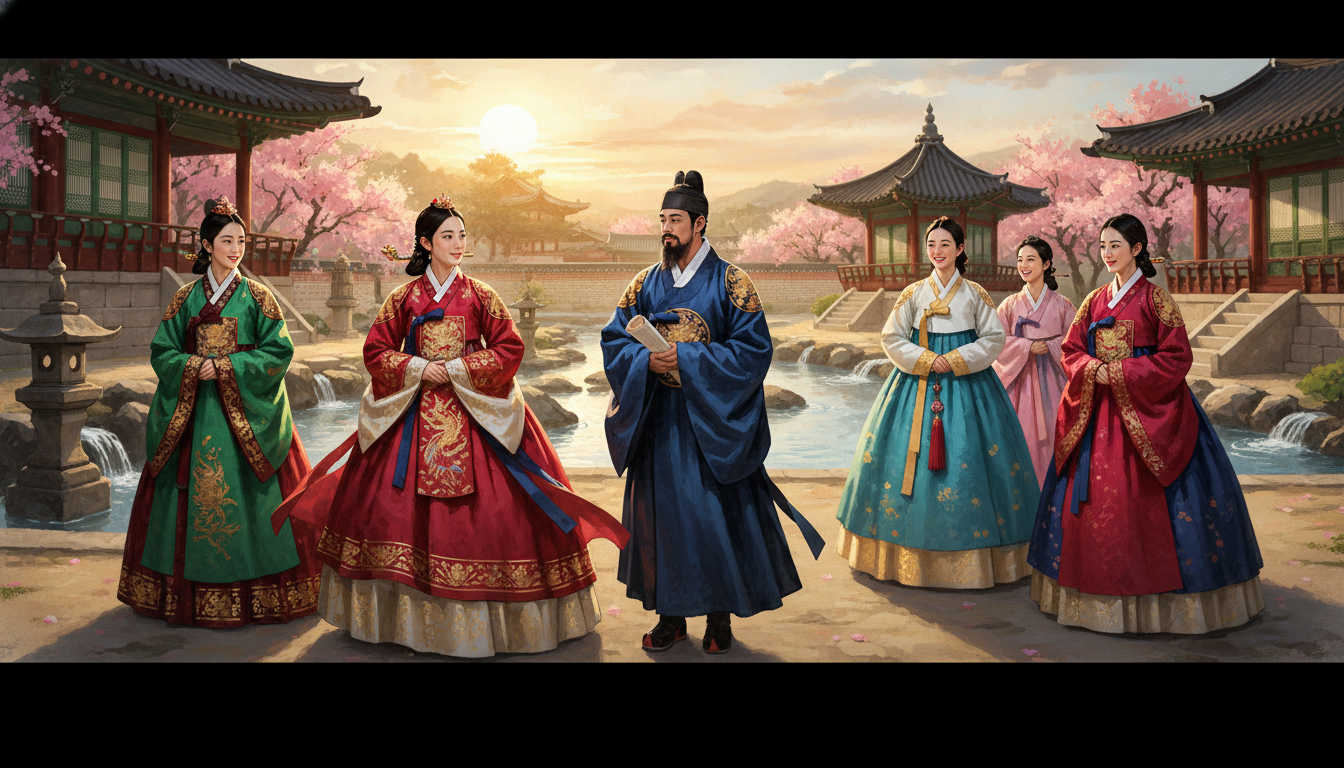
The Hanbok is the traditional attire of the Korean people, characterized by vibrant colors and simple lines without pockets. While the term literally means ‘Korean clothing,’ it specifically refers to the style established during the Joseon Dynasty. Today, it remains a powerful symbol of Korean identity and heritage, worn during special holidays, festivals, and formal ceremonies.
1. The Anatomy and Structure of Hanbok
Understanding the Hanbok begins with its unique components. For women, the outfit consists of the Jeogori (a short jacket) and the Chima (a full, wrap-around skirt). Men wear the Jeogori paired with Baji (loose-fitting trousers). Unlike Western clothing that emphasizes the body’s curves, the Hanbok focuses on creating a graceful silhouette through movement and volume.
2. The Significance of the Jeogori
The Jeogori is the basic upper garment worn by both men and women. In women’s fashion, the length of the Jeogori has changed drastically over centuries; during the mid-Joseon period, it was quite long, reaching the waist, but by the late 19th century, it became so short that it barely covered the chest, requiring a wide band called a Heoritti.
3. The Flow of the Chima
The Chima is more than just a skirt; it is designed to hide the lower body’s shape, reflecting the Confucian values of modesty. The way it billows when the wearer walks or dances is often described as ‘wind-like,’ emphasizing the aesthetic of naturalism and fluid motion.
4. Symbolism in Colors: The Obangsaek
Color in Hanbok is never accidental. Traditional Hanboks utilize the Obangsaek, or the five directional colors: white, black, red, blue, and yellow. These colors represent the five elements (wood, fire, earth, metal, and water) and are believed to bring balance and protection to the wearer. For example, yellow was often reserved for royalty as it symbolized the center of the universe.
5. White: The Color of the People
Historically, Koreans were known as the ‘white-clad people’ (baeguiminjok). Commoners frequently wore white or undyed hemp and cotton, symbolizing purity, integrity, and a humble spirit. Brightly colored Hanboks were typically reserved for the nobility (yangban) or special life events like weddings.
6. 51 Interesting Facts About Hanbok
- 1. The Hanbok dates back to the Three Kingdoms period (57 BC – 668 AD).
- 2. Ancient murals in Goguryeo tombs show the earliest versions of the Hanbok.
- 3. It is designed to be flat when laid out but becomes three-dimensional when worn.
- 4. There are no pockets in traditional Hanbok; people carried small pouches called Bokjumeoni.
- 5. The curved line of the Baerae (the bottom line of the jacket sleeves) mimics the eaves of traditional Korean houses (Hanok).
- 6. The Dongjeong is a white detachable collar that helps keep the neck area clean and provides a sharp contrast.
- 7. A Goreum is the long ribbon used to tie the Jeogori, and its knotting technique is an art in itself.
- 8. Children wear Saekdongot (multi-colored striped sleeves) to ward off evil spirits.
- 9. The Myeonbok was the most formal ceremonial robe worn by kings.
- 10. Traditionally, silk was the fabric of choice for the upper class, while commoners used hemp or ramie.
- 11. Kkotsin are traditional silk shoes embroidered with flower patterns.
- 12. A woman’s marital status was once indicated by the color of her Hanbok’s collar and cuffs.
- 13. The Otgoreum (ribbon) color could signal if a woman had a son.
- 14. Hanbok is categorized by its use: everyday wear, ceremonial wear, and special-purpose wear.
- 15. The Po is a general term for an outer robe or overcoat worn by men.
- 16. Gat is the traditional horsehair hat worn by scholars and officials.
- 17. During the Joseon period, the Dangui was the minor ceremonial indoor dress for court ladies.
- 18. The Hwarot is a magnificent bridal gown heavily embroidered with symbols of long life and happiness.
- 19. Red symbolizes good fortune and wealth, which is why it is dominant in wedding attire.
- 20. Indigo blue represents constancy and was often used for the skirts of court ladies.
- 21. Modern Hanbok (Saenghwal Hanbok) emerged in the 1990s for easier daily wear.
- 22. K-pop idols like Blackpink and BTS have popularized ‘Modernized Hanbok’ globally.
- 23. Hanbok Day in South Korea is celebrated on October 21st.
- 24. Wearing Hanbok often grants free entry to royal palaces in Seoul.
- 25. The Jeonbok is a sleeveless vest often worn by military officials.
- 26. Beoseon are traditional white socks that have a distinct pointed shape.
- 27. The silhouette of the Hanbok is meant to resemble a ‘bell’ shape.
- 28. Peony patterns on Hanbok symbolize honor and wealth.
- 29. Pomegranate patterns represent the wish for many children.
- 30. Bats were surprisingly considered a symbol of good luck and were often embroidered on pouches.
- 31. The Durumagi is a traditional overcoat worn to protect against the cold.
- 32. Hanbok fabrics are often dyed using natural pigments from plants and minerals.
- 33. Ramie fabric (Hansan Mosi) is so fine it is listed as a UNESCO Intangible Cultural Heritage.
- 34. The Norigae is a decorative pendant hung from the jacket’s ribbon or the skirt’s waist.
- 35. Binyeo is a traditional ornamental hairpin used to hold a bun in place.
- 36. Men’s Baji are tied with a Daemnim (ankle strap) to ensure warmth and ease of movement.
- 37. The Ayam is a traditional winter cap for women that doesn’t cover the top of the head.
- 38. Jobawi is another type of winter hat for women with earflaps.
- 39. In the past, the width of the sleeves indicated social status.
- 40. The Sokchima (petticoat) gives the Chima its voluminous shape.
- 41. Doljanchi is the first birthday celebration where a baby wears a bright Hanbok called Dol-bok.
- 42. Seollal (Lunar New Year) is the most common time for Koreans to wear Hanbok today.
- 43. Chuseok (Harvest Festival) is another major occasion for traditional dress.
- 44. The Gwanrye is the coming-of-age ceremony where youths wear adult Hanbok for the first time.
- 45. Jokduri is a small, ornate crown worn by brides.
- 46. The Wonsam was a ceremonial overcoat for married women in the court.
- 47. Hanbok design emphasizes the ‘beauty of space’ (yeobaek-ui-mi).
- 48. It is considered one of the most scientific pieces of clothing due to its adjustable nature.
- 49. The Sokbaji (under-pants) were worn by women under the Chima for warmth and modesty.
- 50. Global fashion designers like Karl Lagerfeld have drawn inspiration from Hanbok.
- 51. Hanbok is increasingly seen as ‘slow fashion’ due to its durability and timeless style.
7. Evolution into Modern Fashion
Today, the Hanbok is undergoing a renaissance. No longer confined to museums or wedding halls, young Koreans and international fans are embracing ‘Modern Hanbok.’ These designs incorporate shorter skirts, pockets, and zippers, making them practical for the 21st-century lifestyle while preserving the essential aesthetic elements like the Jeogori’s neckline and the Goreum ribbons.
The Influence of Hallyu
The global spread of Korean dramas and music, known as the Hallyu wave, has played a pivotal role in the Hanbok’s popularity. Period dramas (Saguek) showcase the breathtaking beauty of historical costumes, while K-pop stars integrate Hanbok elements into their music videos and stage outfits, sparking a worldwide interest in Korean textiles and design.
8. How to Properly Wear a Hanbok
Wearing a Hanbok requires attention to detail. For women, the Chima should be wrapped so that the opening is on the left side. The Otgoreum (ribbon) must be tied into a specific half-bow shape that points toward the heart. For men, the Daemnim (ankle ties) must be secured firmly to create the characteristic ballooning effect of the trousers.
Conclusion: A Living Heritage
The Hanbok is not merely a relic of the past; it is a living part of Korean culture that continues to evolve. By blending tradition with contemporary functionality, the Hanbok remains a source of pride for Koreans and a subject of fascination for the world. Whether it is the vibrant silk of a wedding gown or the simple linen of a modern vest, the Hanbok continues to tell the story of Korea’s rich history and bright future.