



The Cultural Phenomenon of Reply 1988
Reply 1988 is widely regarded as one of the greatest Korean dramas of all time. Released in late 2015, it served as the third installment of the ‘Reply’ series by Director Shin Won-ho and Writer Lee Woo-jung. Unlike its predecessors, which focused heavily on the ‘husband hunt’ mystery, this installment shifted its lens toward the warmth of family bonds and neighborhood camaraderie in the year 1988.
1. The Massive Scale of the Ssangmun-dong Set
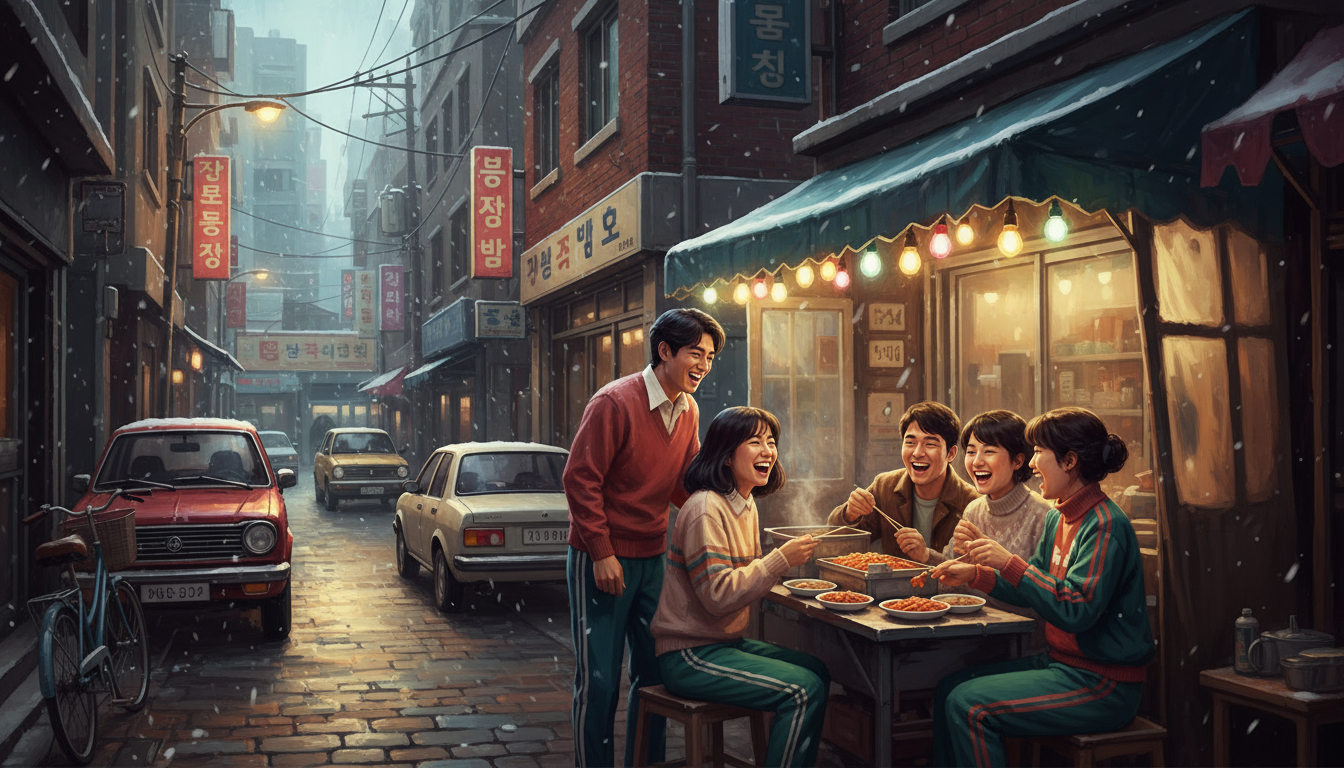
One of the most impressive facts about the production is that the entire neighborhood of Ssangmun-dong was a massive set built from scratch in Uijeongbu. The production team spent months researching 1980s architecture to ensure every brick, alleyway, and rooftop felt authentic to the era. This attention to detail allowed the actors to truly inhabit their characters’ world.
2. Park Bo-gum and the Real-Life Inspiration for Choi Taek
The character of Choi Taek, the genius Baduk player, was inspired by the real-life legendary Baduk player Lee Chang-ho. Like Taek, Lee was known for his calm demeanor and incredible focus. Park Bo-gum actually took Baduk lessons to make his gameplay look professional, though he admitted he still found the game incredibly complex.
Casting Secrets and Character Development
The casting process for Reply 1988 was rigorous, as the director wanted actors who felt like ‘real people’ rather than polished stars. This led to some surprising choices that eventually became iconic career-defining roles for the cast members.
3. Hyeri’s Initial Casting Controversy
When Girl’s Day member Hyeri was first announced as the lead, Sung Duk-seon, the public was skeptical. However, Director Shin Won-ho saw her natural, unpretentious personality during auditions and knew she was perfect. Upon the drama’s release, her performance was so convincing that she silenced all critics and became the heart of the show.
4. Ryu Jun-yeol’s Audition Journey
Ryu Jun-yeol, who played Kim Jung-hwan, was a relatively unknown actor at the time. He auditioned for several roles before being cast as the tsundere lead. His chemistry with the rest of the ‘Ssangmun-dong Five’ was so natural that many fans still consider him the emotional anchor of the friendship group.
Historical Accuracy and 1988 Context
The year 1988 was a pivotal moment in South Korean history, and the drama used these events to ground its fictional story in reality. This historical backdrop provided a sense of shared memory for older viewers and an educational experience for younger ones.
5. The 1988 Seoul Olympics
The drama opens with the 1988 Seoul Olympics, where Duk-seon serves as a picket girl for Madagascar. Interestingly, the story about Madagascar withdrawing from the games was a real historical event, and the production team went to great lengths to recreate the picket girl training sequences accurately.
6. The Soundtrack of a Generation
The OST of Reply 1988 consists mostly of remakes of popular 80s hits. Songs like ‘Youth’ by Kim Feel and ‘Don’t Worry’ by Lee Juck became massive hits all over again, topping digital charts decades after the original versions were released. These songs perfectly captured the bittersweet feeling of growing up.
The ‘Husband Hunt’ and Fan Reactions
While the drama focused on family, the mystery of who Duk-seon would eventually marry kept the audience in a state of constant debate. The rivalry between ‘Team Jung-hwan’ and ‘Team Taek’ was one of the most intense in K-drama history.
7. The Writer’s Final Decision
There is much debate about when the writer decided on the final husband. Some believe it was planned from the start, while others speculate the chemistry between Park Bo-gum and Hyeri influenced the outcome. Regardless, the choice of Choi Taek as the husband remains a polarizing yet poetic conclusion to the series.
8. Real-Life Romance: Ryu Jun-yeol and Hyeri
While Jung-hwan didn’t get the girl on screen, Ryu Jun-yeol and Hyeri shocked the world by confirming their real-life relationship shortly after the drama ended. Their long-term relationship became a source of comfort for fans who were heartbroken by the show’s ending, proving that Ssangmun-dong love transcends the script.
Behind-the-Scenes Fun Facts
- 9. The ‘Goat’ Sound Effect: The iconic goat bleat used during awkward moments became a signature of the series, added during post-production to enhance the comedic timing.
- 10. Ad-libs: Many of the funniest moments, especially involving Lee Dong-hwi (Dong-ryong), were unscripted ad-libs that the director decided to keep.
- 11. The Three Mothers: The chemistry between the three neighborhood mothers was so strong that they became close friends in real life, often meeting for meals outside of filming.
12. The Cost of Props
Finding authentic 1980s props was a challenge. The production team scoured flea markets and antique shops across Korea to find specific items like old ramen packaging, electronics, and even the specific brand of cigarettes used in that era. Some items had to be specially manufactured based on old photographs.
Legacy and Global Impact
Reply 1988 didn’t just succeed in Korea; it became a global sensation, introducing international audiences to the concept of ‘Jeong’ (a deep Korean sense of affection and attachment).
13. Ratings Records
At the time of its finale, Reply 1988 held the record for the highest-rated drama in Korean cable television history, with a peak viewership rating of 18.8%. It held this title for several years before being surpassed by ‘Sky Castle’ and ‘Crash Landing on You’.
14. Tourism in Ssangmun-dong
Although the original set was demolished, the actual neighborhood of Ssangmun-dong in Dobong District, Seoul, saw a massive influx of tourists. Fans visited the real locations mentioned in the show, such as the Brazilian Tteokbokki shop and the local pharmacy, boosting the local economy.
The Importance of the Parents’ Storylines
What sets Reply 1988 apart is that it gave equal weight to the stories of the parents. The struggles of Sung Dong-il as a father trying to provide for his family, and Kim Sung-kyun’s quirky attempts to bring joy to his household, resonated deeply with viewers of all ages.
15. The Ending’s Emotional Weight
The final episode, which shows the neighborhood being vacated as families move away to modern apartments, symbolized the end of an era. It wasn’t just about the characters moving; it was about the loss of a specific type of community living that is rarely found in modern urban societies.
Conclusion: Why We Still Watch It
Even years after its conclusion, Reply 1988 remains a ‘comfort drama’ for many. Its 48+ layers of intricate storytelling, historical nods, and genuine performances ensure that it will be discussed and cherished for generations to come. Whether you are Team Taek or Team Jung-hwan, the true winner of the show is the spirit of Ssangmun-dong.