
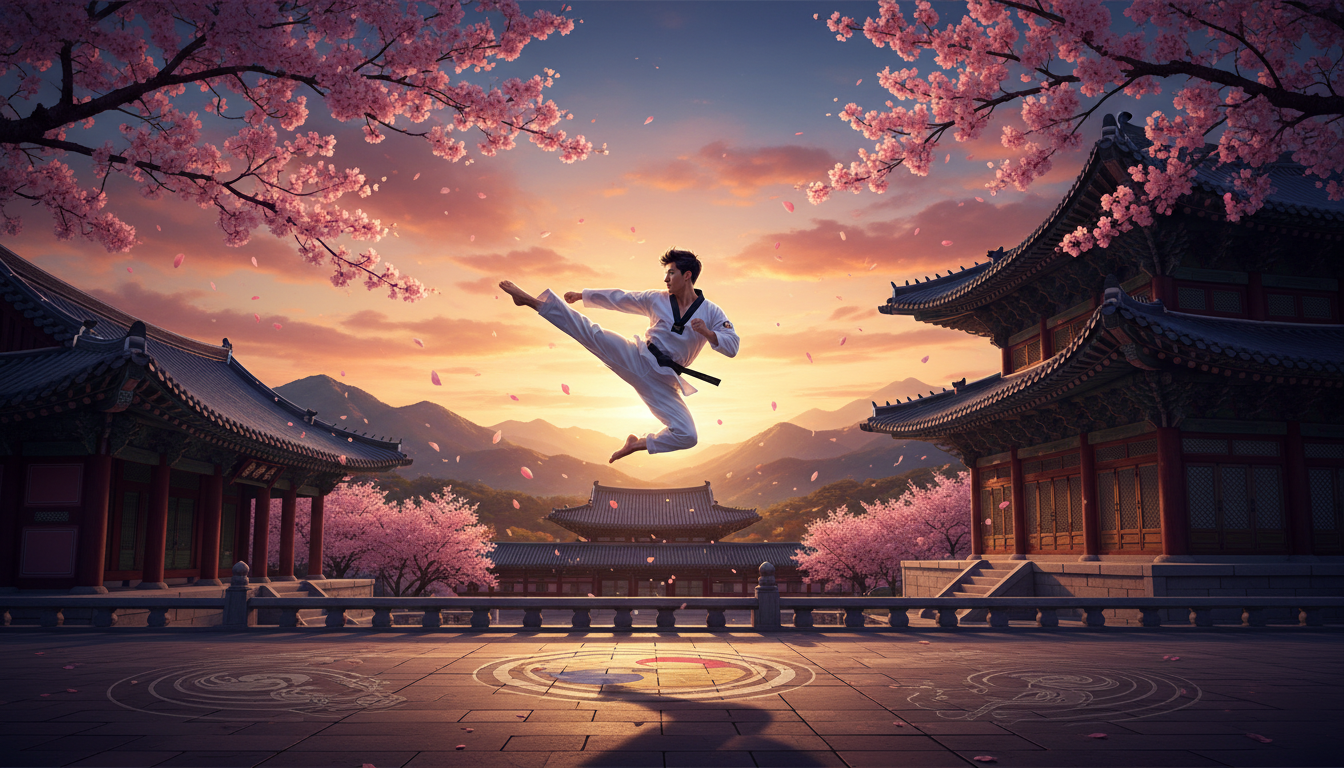
Taekwondo is far more than a system of self-defense or a competitive sport; it is a quintessential element of South Korea’s cultural identity and national heritage. Recognized globally for its dynamic high kicks and disciplined philosophy, Taekwondo serves as a bridge between Korea’s ancient past and its modern global influence. To truly understand the “Way of the Foot and Fist,” one must delve into the historical, technical, and cultural nuances that define it.
The number 56 is often associated with the variety of motions and the depth of knowledge required to master this art. In this detailed exploration, we uncover 56 interesting facts and insights that highlight how Taekwondo has shaped, and been shaped by, Korean history and society. From the warriors of the Three Kingdoms to the electronic scoring systems of the modern Olympics, the journey of Taekwondo is a testament to Korean resilience and innovation.
The Historical Roots of Taekwondo
1. Ancient Origins: The roots of Taekwondo can be traced back over 2,000 years to the Three Kingdoms period of Korea (Goguryeo, Baekje, and Silla). Artifacts and murals from the Goguryeo dynasty depict stances and sparring techniques that resemble modern Taekwondo.
2. The Hwarang Warriors: The Hwarang, a group of elite young noblemen in the Silla Kingdom, were instrumental in developing the philosophical and physical foundation of Korean martial arts. They practiced Subak (a precursor to Taekwondo) alongside academic and moral training.
3. Indigenous Styles: Before the name “Taekwondo” existed, various forms of Korean martial arts flourished, including Taekkyon and Subak. Taekkyon, known for its fluid, dance-like movements, heavily influenced the footwork seen in modern Taekwondo.
The Unification of the Kwans
Following the end of the Japanese occupation in 1945, Korean martial arts masters sought to reclaim their heritage. This led to the formation of the original “Kwans” or schools. Here are key facts regarding this era:
- 4. The Name: The term “Taekwondo” was officially coined and proposed in 1955 to unify the various Kwans under a single banner.
- 5. General Choi Hong Hi: Often credited as a principal founder, General Choi played a pivotal role in naming the art and spreading it internationally.
- 6. KTA Formation: The Korea Taekwondo Association (KTA) was established in 1959 to standardize training and competition rules.
- 7. Kukkiwon: Established in 1972 in Seoul, the Kukkiwon serves as the World Taekwondo Headquarters and the center for black belt certification.
Philosophy and The “Do”
8. Meaning of the Name: The word breaks down into three parts: “Tae” (foot/kick), “Kwon” (fist/punch), and “Do” (the way/art). Thus, it is the Art of Kicking and Punching.
9. Confucian Influence: The moral code of Taekwondo is deeply rooted in Confucianism, emphasizing respect for elders, loyalty to the nation, and filial piety.
10. The Five Tenets: Every practitioner is expected to memorize and live by the five tenets: Courtesy (Ye-Ui), Integrity (Yom-Chi), Perseverance (In-Nae), Self-Control (Guk-Gi), and Indomitable Spirit (Baek-Jool Bool-Gool).
11. Meditation: Many traditional dojangs (training halls) incorporate meditation to clear the mind before and after training, reinforcing the mind-body connection.
Technical Distinctiveness
What sets Taekwondo apart from other martial arts like Karate or Kung Fu is its heavy emphasis on kicking techniques. The leg is the longest and strongest weapon on the human body, and Taekwondo maximizes this advantage.
- 12. High Kicks: Taekwondo is famous for head-height kicks, jumping kicks, and spinning kicks.
- 13. The 540 Kick: Advanced practitioners perform the 540 kick, which involves rotating 540 degrees in the air before striking.
- 14. Stance Physics: Stances are designed to generate maximum torque and power through hip rotation, a principle grounded in modern physics.
- 15. Poomsae: These are arranged patterns of movement that simulate a fight against imaginary opponents. They are essential for refining balance and technique.
16. The Dobok: The white uniform, or Dobok, symbolizes purity and the blank slate of the student. Its V-neck design is unique to Taekwondo, distinguishing it from the wrapped gi of Karate.
17. The Belt System: The progression from white to black belt symbolizes the growth of a plant. White is the seed, yellow is the sun, green is the plant, blue is the sky, red is danger/maturity, and black is the universe or mastery.
Taekwondo in Modern Korean Culture
In South Korea, Taekwondo is not just an extracurricular activity; it is woven into the fabric of daily life. It is common for children to attend academies after school, viewing the dojang as a second home.
18. Military Service: All able-bodied South Korean men must serve in the military, where Taekwondo training is often a mandatory part of physical conditioning. Special forces units practice a more lethal, combat-oriented version.
19. Academic Degrees: Korea was the first nation to offer university degrees in Taekwondo. Students can major in the sport, studying its history, physiology, and management.
20. Taekwondowon: Located in Muju, South Korea, the Taekwondowon is a massive dedicated park and training complex for Taekwondo practitioners worldwide, featuring a stadium, museum, and experience center.
Global Impact and The Olympics
The globalization of Taekwondo is one of Korea’s most successful cultural exports, often referred to as “Sports Diplomacy.” The following facts highlight its international stature:
- 21. Olympic Debut: Taekwondo became an official medal sport at the 2000 Sydney Olympics.
- 22. Global Practitioners: It is estimated that over 80 million people in more than 200 countries practice Taekwondo.
- 23. Electronic Scoring: To ensure fairness in the Olympics, Taekwondo introduced electronic chest protectors and helmets that register points based on impact pressure.
- 24. The WTF vs. ITF: There are two main styles: World Taekwondo (WT), which is the Olympic style, and the International Taekwon-Do Federation (ITF), which is more traditional.
Interesting Miscellaneous Facts
25. Breaking (Kyukpa): Board breaking is not just for show; it demonstrates the practitioner’s ability to focus power on a single point. Advanced demonstrations use bricks or ice.
26. The Kihap: The loud yell, or Kihap, serves to tighten the core muscles to protect the body from impact and to intimidate the opponent while focusing energy.
27. Age is No Limit: There are active practitioners in Korea well into their 80s and 90s, proving it is a lifelong exercise.
28. K-Tigers: The K-Tigers demonstration team blends K-Pop dance with Taekwondo, creating a viral cultural phenomenon that appeals to the younger generation.
29. Barefoot Training: Training is done barefoot to stimulate nerve endings in the feet and improve balance and connection with the ground.
30. Respecting the Flag: In every dojang, students bow to the national flag (or the flags of both Korea and their home country) as a sign of respect for the art’s origins.
The Future of The Art
As we look at the remaining facts surrounding this martial art, we see evolution. Taekwondo continues to adapt, introducing new competition formats like mixed-gender team events and freestyle poomsae to keep the sport exciting for modern audiences.
56. A Symbol of Peace: Ultimately, despite its martial applications, the highest goal of Taekwondo is the promotion of peace and a more just society. The Kukkiwon Demonstration Team travels the world not to fight, but to spread a message of harmony and cultural exchange.
From the ancient Hwarang warriors to the modern Olympic arenas, Taekwondo remains a vibrant, living entity. These facts only scratch the surface of a discipline that requires a lifetime to truly master. For anyone interested in Korean culture, understanding Taekwondo is essential to grasping the Korean spirit of perseverance and courtesy.