Seollal, the Korean Lunar New Year, stands as the most significant traditional holiday in South Korea. It is a time for family reunions, honoring ancestors, and welcoming the new year with hope and renewal. While many Westerners are familiar with the concept of the Lunar New Year, the specific customs and nuances of Seollal offer a deep dive into the unique cultural identity of the Korean peninsula. This celebration usually lasts for three days: the day before, the day of, and the day after the first day of the lunar calendar.
The Historical Roots and Significance of Seollal
The history of Seollal is deeply intertwined with Korea’s agricultural past and the lunar cycle. Historically, it served as a time to pray for a bountiful harvest and to show gratitude for the survival of the previous winter. Records of the celebration date back to the Three Kingdoms period, specifically mentioned in the Samguk Sagi. Despite the introduction of the Gregorian calendar in 1895, the lunar celebration remained the heart of the people’s traditions, even during periods of suppression under colonial rule.
The Evolution of the Holiday
For a period in the 20th century, the South Korean government attempted to shift the focus to the solar New Year on January 1st to align with international standards. However, the cultural pull of Seollal was too strong. In 1985, it was officially recognized as ‘Folk Day,’ and by 1989, it was formally restored as a three-day national holiday known as Seollal. This restoration marked a significant victory for cultural preservation in a rapidly modernizing society.
Core Traditions: Charye and Sebae
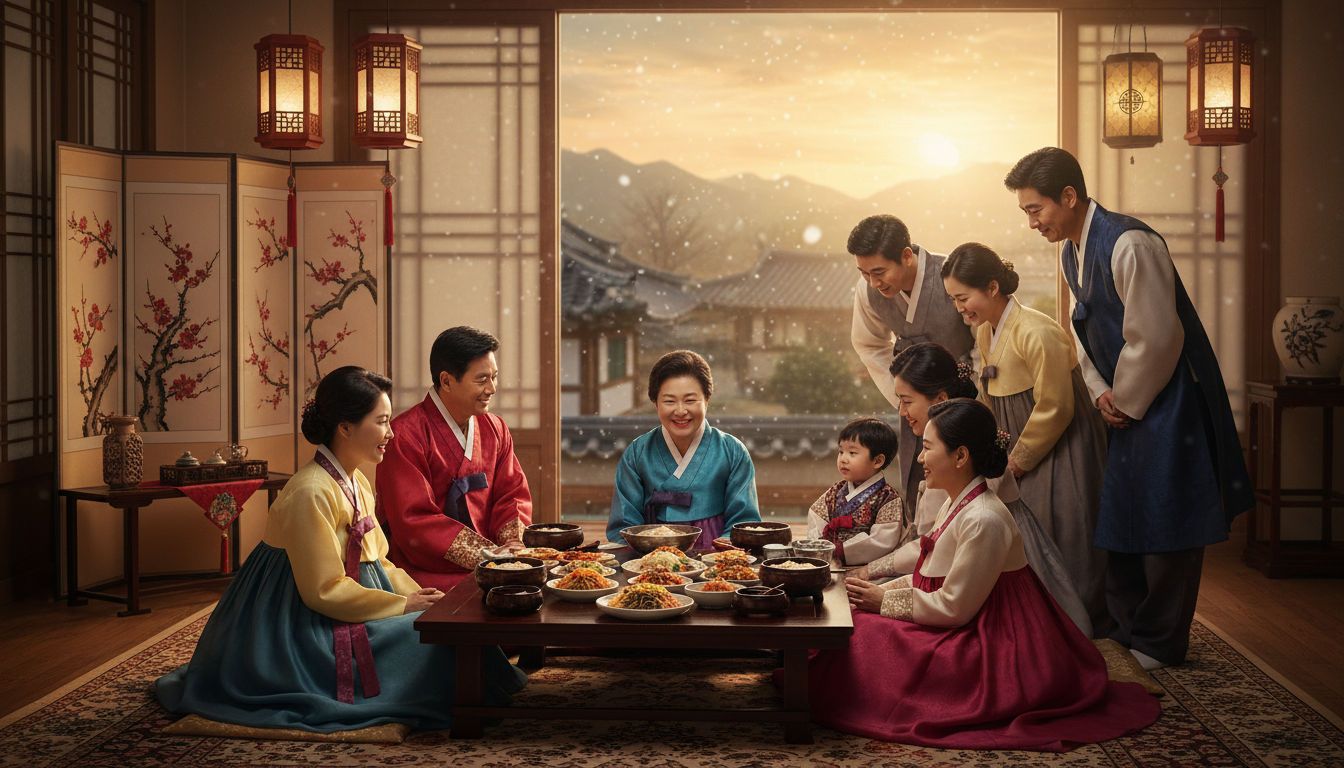
One of the most vital aspects of Seollal is Charye, a solemn ancestral memorial service. Families gather to offer food and drink to the spirits of their ancestors, believing that these offerings ensure the ancestors’ protection for the coming year. The arrangement of the food on the table is highly specific, following traditional rules such as ‘red fruits to the east and white fruits to the west.’ This ritual reinforces the Confucian values of filial piety and the continuity of the family lineage.
The Art of the Deep Bow: Sebae
Following the ancestral rites, the younger generations perform Sebae, a formal deep bow to their elders. This act is not merely a greeting but a profound sign of respect and a wish for the elder’s longevity and health. In return, elders give their blessings (deokdam) and often present the younger family members with Sebaetdon, or New Year’s money. This exchange strengthens the generational bonds and teaches children the value of respect and family hierarchy.
Symbolism in Seollal Cuisine
Food plays a central role in Seollal, with Tteokguk being the most iconic dish. This soup consists of thinly sliced rice cakes in a clear broth. The white color of the rice cakes symbolizes purity and a fresh start for the new year, while the round shape resembles old Korean coins, representing prosperity. Interestingly, Koreans often say that one does not truly turn a year older until they have finished their bowl of Tteokguk on Seollal morning.
Diverse Flavors of the New Year
Beyond Tteokguk, other traditional dishes include Jeon (savory pancakes), Galbi-jjim (braised short ribs), and Japchae (stir-fried glass noodles). These dishes require significant preparation time, often involving the entire family in the kitchen. The act of preparing these meals together is considered just as important as the meal itself, fostering a sense of community and shared responsibility within the household.
Traditional Games and Entertainment
Seollal is also a time for play. Yutnori is perhaps the most popular board game played during the holiday. It involves throwing four wooden sticks to determine movement on a board. The game is highly competitive and often played in teams, making it a perfect activity for large family gatherings. Other traditional activities include Neolttwigi (a seesaw jumping game historically played by women) and Yeon-nalligi (kite flying), which was believed to fly away bad luck.
Hanbok: The Traditional Dress
During Seollal, many Koreans wear Hanbok, the traditional Korean attire. The specific Hanbok worn for the New Year is called ‘Seol-bim.’ While modern Koreans may not wear Hanbok daily, donning these colorful, elegant garments for Seollal is a way to honor their heritage. The vibrant colors and graceful lines of the Hanbok add a festive and dignified atmosphere to the family ceremonies and visits.
55 Interesting Facts About Seollal
To understand the depth of this holiday, let us explore 55 specific facts that define the Seollal experience:
- 1. Seollal is the first day of the lunar calendar.
- 2. It is a three-day public holiday.
- 3. The date changes every year based on the moon.
- 4. It is the busiest travel time in South Korea, known as the ‘Great Migration.’
- 5. Millions of people travel from Seoul to their hometowns.
- 6. Train tickets for Seollal are often sold out months in advance.
- 7. Seollal is a time for ‘Gwiseong,’ or returning to one’s roots.
- 8. Ancestral rites (Charye) are usually performed by the eldest son.
- 9. The food for Charye must be prepared with the utmost care and no tasting.
- 10. Tteokguk is the mandatory dish for the morning of Seollal.
Customs and Social Etiquette
- 11. Eating Tteokguk adds one year to your ‘Korean age.’
- 12. Sebae is performed with the hands placed in a specific position (Gongsu).
- 13. Children often practice their Sebae bows for weeks.
- 14. Sebaetdon is usually given in crisp, new banknotes.
- 15. Gift sets are a massive industry during Seollal.
- 16. Popular gifts include Spam, high-quality beef (Hanwoo), and dried croaker (Gulbi).
- 17. Fruit gift sets must contain perfectly shaped, unblemished fruit.
- 18. Many department stores create elaborate displays for Seollal gifts.
- 19. It is common to exchange ‘Deokdam’ (words of wisdom) during the meal.
- 20. Ghost stories were traditionally told to keep children from sleeping, as it was believed eyebrows would turn white if they slept on Seollal eve.
Symbols and Superstitions
- 21. The zodiac animal of the year changes on Seollal.
- 22. People often buy charms or items featuring the year’s zodiac animal.
- 23. Bokjumeoni (luck pouches) are worn or given to bring good fortune.
- 24. Traditionally, shoes were hidden on the eve of Seollal to prevent ghosts from stealing them.
- 25. A ‘Bokjori’ (lucky rice strainer) is often hung on walls.
- 26. The first person you see on Seollal morning can predict your luck for the year.
- 27. It is considered bad luck to sweep the floor on Seollal, as you might sweep away the luck.
- 28. Many people visit the East Coast to see the first sunrise of the year.
- 29. Seollal is a time to settle all debts from the previous year.
- 30. The phrase ‘Saehae bok mani badeuseyo’ means ‘Please receive much luck in the New Year.’
Games and Cultural Activities
- 31. Yutnori sticks are traditionally made from birch or chestnut wood.
- 32. Kite flying (Yeon-nalligi) often involves cutting the strings of rivals’ kites.
- 33. Paeng-i-chigi (top spinning) is a popular winter game for children.
- 34. Jegichagi involves kicking a weighted shuttlecock to keep it in the air.
- 35. Traditional music (Gukak) is often performed in public squares.
- 36. Many palaces in Seoul offer free entry during the Seollal period.
- 37. Folk villages host special events to demonstrate traditional rice cake pounding.
- 38. Mask dances (Talchum) were historically performed to ward off evil spirits.
- 39. Seesaw jumping (Neolttwigi) allowed women in the past to see over high walls.
- 40. Archery contests were common during Seollal in ancient times.
Modern Trends and Global Impact
- 41. ‘Hon-myeong’ refers to people who spend the holiday alone (Hon-ja + Myeong-jeol).
- 42. Travel abroad during Seollal has become a popular alternative for young families.
- 43. Virtual Charye services have emerged for those who cannot travel.
- 44. K-Pop idols often release special Seollal greeting videos in Hanbok.
- 45. The ‘Seollal traffic jam’ is a recurring theme in Korean news and comedy.
- 46. Many convenience stores offer special Seollal-themed lunch boxes (Dosirak).
- 47. Seollal is celebrated by the Korean diaspora worldwide.
- 48. In the US and Europe, Korean communities host festivals to share Seollal culture.
- 49. The holiday emphasizes the importance of ‘Jeong’ (social bonding/affection).
- 50. Corporate offices usually close for the entire duration of the holiday.
- 51. Gift-giving has moved online with ‘KakaoTalk’ gift certificates.
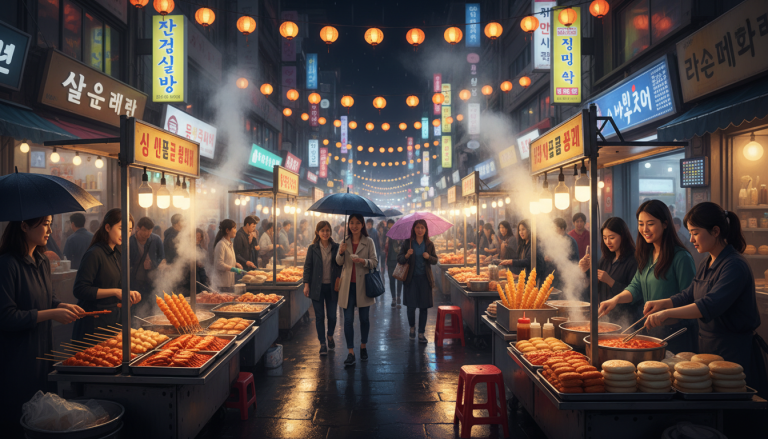
- 52. Traditional markets see a massive surge in sales for dried fish and vegetables.
- 53. The ‘Stress of Seollal’ is a recognized social phenomenon for those doing the cooking.
- 54. Despite modernization, the core value of family remains unchanged.
- 55. Seollal is a testament to the resilience of Korean cultural heritage.
The Modern Reality of Seollal
In contemporary South Korea, Seollal is evolving. While the traditional image of a large extended family gathered in a rural house remains the ideal, urban reality often looks different. Many families now opt for smaller gatherings or even ‘reverse-Gwiseong,’ where parents travel from the countryside to the city to visit their children. This shift reflects the changing demographics and the high pace of life in modern Korea. Despite these changes, the essence of the holiday—gratitude, respect, and family—remains the bedrock of the celebration.
Conclusion: A Bridge Between Past and Future
Seollal is more than just a break from work; it is a cultural anchor that connects modern Koreans to their ancestors and their history. Whether it is through the meticulous preparation of Tteokguk, the respectful bow of Sebae, or a heated game of Yutnori, the traditions of Seollal ensure that the spirit of Korea continues to thrive. As the world becomes increasingly globalized, the preservation of such unique and meaningful holidays serves as a reminder of the beauty of cultural diversity and the enduring power of family bonds.