

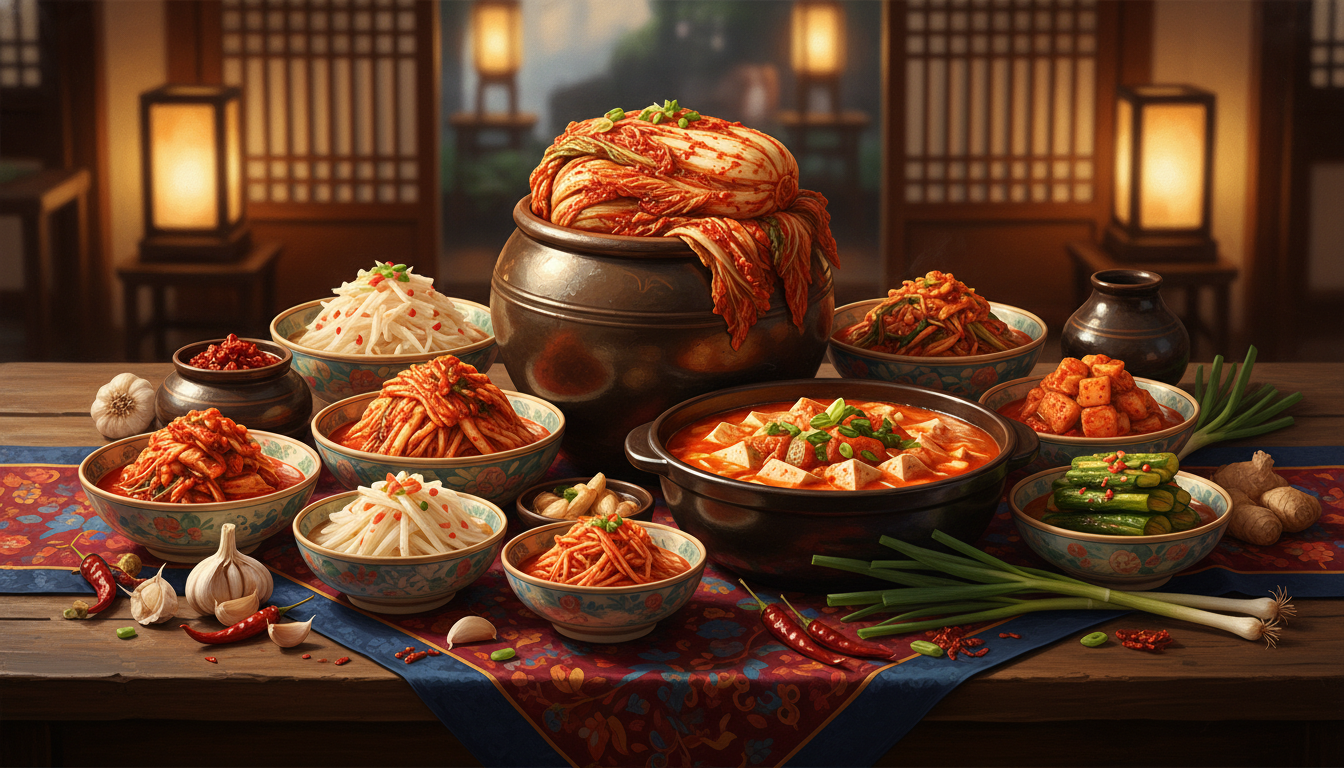
Kimchi is far more than a mere side dish in South Korea; it is a quintessential element of national identity, a staple of daily life, and a symbol of Korean heritage recognized globally. While most the world recognizes it as spicy fermented cabbage, the reality of kimchi is infinitely more complex and fascinating. To truly understand Korean culture, one must understand the history, science, and etiquette surrounding this fermented superfood.
The number 52 in the title of this exploration represents the vast array of nuances associated with kimchi, roughly corresponding to the weeks in a year, emphasizing that kimchi is a year-round necessity. Whether consumed fresh or aged for years, it accompanies almost every meal, from breakfast to dinner. Below, we explore the historical evolution, regional varieties, and surprising trivia that make up the fascinating world of kimchi.
The Historical Evolution of Kimchi
Contrary to popular belief, kimchi was not always the spicy red dish we know today. In fact, for the majority of its history, kimchi was white. The earliest forms of kimchi date back to the Three Kingdoms period (37 BC–7 AD), where fermented vegetables were used to survive harsh winters. However, the defining ingredient of modern kimchi—the red chili pepper—was not introduced to Korea until the early 17th century by Portuguese traders via Japan.
Before the introduction of red chili peppers, kimchi was primarily made with radishes dipped in beef stock or brine. It was known as distinct types of ‘white kimchi’ or *Baek-kimchi*. The addition of chili powder (*gochugaru*) was a revolutionary preservation method that not only added heat but also helped delay the fermentation process, allowing the vegetables to be stored for longer periods.
Key Historical Facts:
- The word ‘kimchi’ evolved from the archaic word ‘jimchae,’ which translates to ‘salted vegetables.’
- Early kimchi was stored in earthenware jars called *onggi*, which are breathable and regulate the fermentation temperature.
- There are historical records of kimchi in the *Samguk Sagi*, a historical record of the Three Kingdoms of Korea.
The Science and Health Benefits
Kimchi is frequently cited as one of the world’s healthiest foods, standing alongside olive oil and yogurt. The magic lies in the fermentation process. As the vegetables ferment, they produce healthy bacteria known as *Lactobacillus kimchii*. These probiotics promote gut health, boost the immune system, and can even aid in weight loss by regulating metabolism.
Nutritionally, kimchi is a powerhouse. It is low in calories but high in fiber, Vitamin A, Vitamin B, and Vitamin C. Furthermore, the garlic, ginger, and chili peppers used in the paste contain allicin and capsaicin, compounds known for their anti-inflammatory and antioxidant properties. Some studies have even suggested that the regular consumption of kimchi can help lower cholesterol and reduce the risk of certain cancers.
Regional Varieties and Ingredients
While *Baechu-kimchi* (napa cabbage kimchi) is the most internationally recognized variety, there are over 200 documented types of kimchi in Korea. The ingredients and preparation methods vary drastically depending on the region, climate, and season. In the northern regions, where it is colder, kimchi tends to be less salty and less spicy, often retaining a refreshing, watery consistency. In the southern regions, where the weather is warmer, more salt and stronger fermented seafood (*jeotgal*) are used to prevent spoilage.
Popular Varieties Include:
- Kkakdugi: Cubed radish kimchi, known for its crunchy texture, often served with soups like *Seolleongtang*.
- Oi Sobagi: Cucumber kimchi, a refreshing, quick-fermenting variety popular in the summer.
- Nabak-kimchi: A watery, red kimchi often consumed during the spring.
- Gat-kimchi: Mustard leaf kimchi, famous in the Jeolla province for its pungent and bitter taste.
Kimjang: A UNESCO Intangible Cultural Heritage
One of the most profound aspects of kimchi culture is *Kimjang*, the traditional practice of making and sharing kimchi. Occurring in late autumn, entire families and communities gather to prepare massive quantities of kimchi to last through the winter. This communal activity reinforces social bonds and Korean identity.
In 2013, UNESCO inscribed Kimjang on the Representative List of the Intangible Cultural Heritage of Humanity. It was recognized not just for the food itself, but for the spirit of sharing and community cooperation (*pumasi*) that defines the event. During Kimjang, it is common for a single household to prepare over 100 heads of cabbage, ensuring there is enough to share with extended family and neighbors.
Kimchi in Modern Economy and Technology
The obsession with kimchi has driven technological innovation in South Korea. The ‘Kimchi Refrigerator’ is a standard appliance in millions of Korean homes. Unlike standard refrigerators, these specialized units mimic the environment of the traditional clay jars buried underground. They maintain a precise, consistent temperature and humidity level to ensure the kimchi ferments perfectly without becoming too sour too quickly.
Economically, kimchi is a serious business. The ‘Kimchi Index’ is sometimes used informally to track the cost of living, based on the fluctuating prices of napa cabbage and other key ingredients. The South Korean government even funds the *World Institute of Kimchi*, a research center dedicated solely to the study and globalization of the dish.
Surprising and Fun Facts About Kimchi
To round out our exploration, here is a collection of fascinating trivia that highlights just how deeply embedded kimchi is in the cultural zeitgeist:
- Space Kimchi: When South Korea’s first astronaut, Yi So-yeon, went to the International Space Station in 2008, she brought a special ‘space kimchi’ developed by scientists to be bacteria-free and odorless while retaining the taste.
- Say ‘Kimchi’: Instead of saying ‘Cheese’ when taking a photo, Koreans say ‘Kimchi’. The ‘i’ sound makes the mouth form a smile.
- Kimchi Museum: Seoul is home to the ‘Museum Kimchikan’, which is dedicated entirely to the history and variety of the dish.
- Separate Utensils: In traditional etiquette, one should not rummage through the kimchi bowl; it is polite to take from the side.
- Hangover Cure: Kimchi stew (*Kimchi-jjigae*) is a popular hangover cure in Korea.
The Global Impact
Today, kimchi has transcended borders. It appears in tacos in Los Angeles, burgers in London, and fusion dishes across the globe. However, despite its international fame, the heart of kimchi remains in the Korean home. It represents patience, as fermentation cannot be rushed, and resilience, as it was born from the need to survive harsh winters.
Whether you are eating fresh *geotjeori* (unfermented kimchi) or a three-year-old *mukeunji* (aged kimchi), you are partaking in a culinary tradition that has survived dynasties, wars, and modernization. The 52 nuances of kimchi—from its ingredients to its cultural rituals—prove that this dish is not just food; it is the soul of Korea.