The Phenomenon of Start-Up in the K-Drama Landscape
The 2020 South Korean television series Start-Up took the world by storm, blending the high-stakes world of technology entrepreneurship with a touching narrative of love and ambition. Set in the fictional Silicon Valley of South Korea, known as Sandbox, the drama followed the journey of young visionaries trying to turn their dreams into reality. One of the most interesting facts about the production is that it was written by Park Hye-ryun and directed by Oh Choong-hwan, the same powerhouse duo behind the hit series While You Were Sleeping. This collaboration ensured a perfect balance of emotional depth and visual flair, making it a standout production of its year.
The Inspiration and Setting of Sandbox
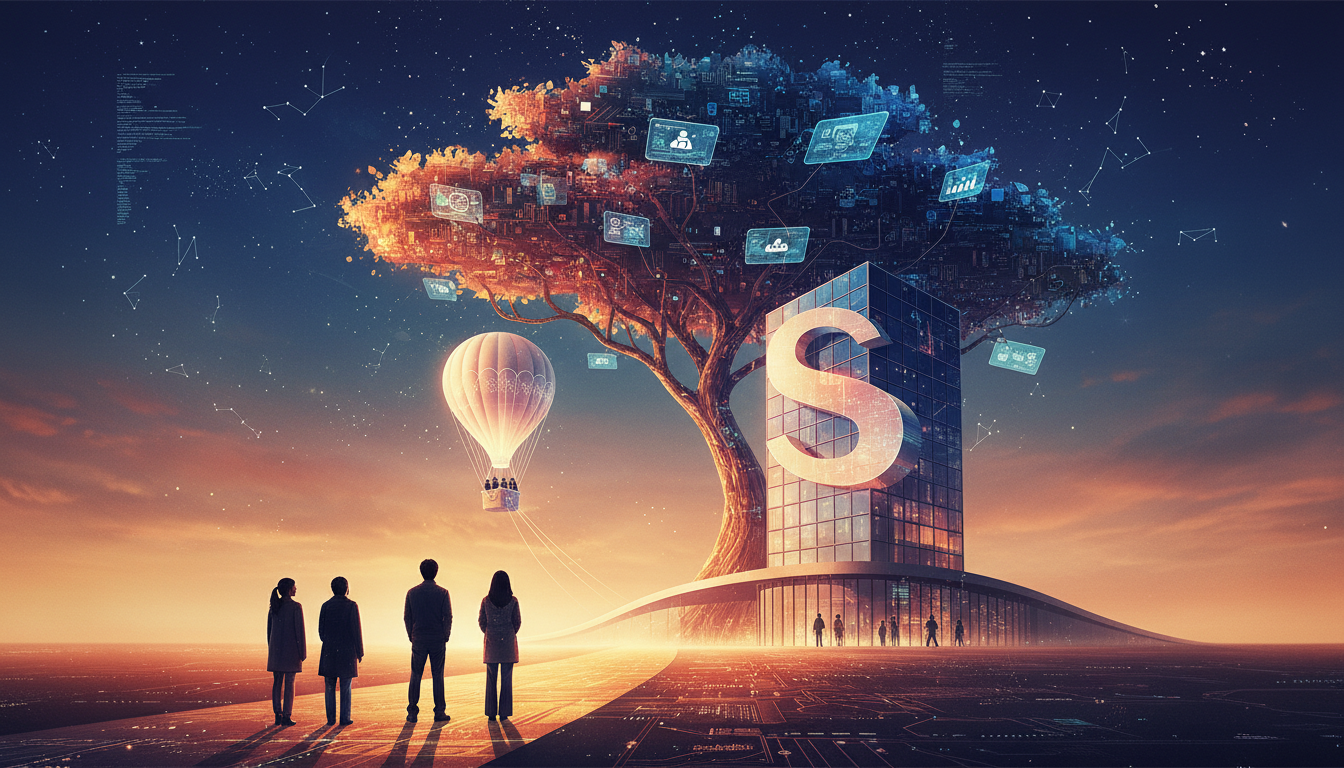
The concept of Sandbox is central to the story, serving as an incubator for fledgling tech companies. While Sandbox is entirely fictional, its design and philosophy were inspired by real-world startup hubs like Silicon Valley in California and Station F in Paris. The name ‘Sandbox’ itself carries a metaphorical meaning within the show: a safe space where children can play and fall without getting hurt. This mirrors the incubator’s goal of providing a safety net for entrepreneurs to innovate and fail without catastrophic consequences. Interestingly, the primary filming location for the Sandbox exterior was Nodeul Island in Seoul, which has since become a popular tourist spot for fans of the show.
1. The Meaning Behind Samsan Tech
The name of the main startup in the series, Samsan Tech, holds a quirky and literal meaning. In Korean, ‘Sam’ means three, and ‘San’ means mountain. The name was chosen because the three original founders—Nam Do-san, Kim Yong-san, and Lee Chul-san—all have the syllable ‘San’ in their names. This detail highlights the humble and somewhat unpolished beginnings of the group before they met Seo Dal-mi. Furthermore, the messy office seen in the early episodes was intentionally designed to look like a ‘nerd’s paradise,’ filled with actual hardware and coding books to enhance the realism of their developer lifestyle.
2. Suzy’s Dedication to Seo Dal-mi
Bae Suzy, who played the lead role of Seo Dal-mi, reportedly spent a significant amount of time researching the lives of young entrepreneurs to prepare for her role. Unlike many K-drama protagonists who are born into wealth, Dal-mi represents the ‘dirt spoon’ generation—those who lack silver spoons but possess immense grit. Suzy’s portrayal was so convincing that she received praise from actual startup founders for capturing the anxiety and excitement of pitching to investors. It is also a fun fact that Suzy personally selected several of the outfits Dal-mi wore to ensure they looked professional yet affordable for someone in her character’s financial position.
The Second Lead Syndrome: Kim Seon-ho’s Rise
Perhaps one of the most talked-about aspects of the drama was the rise of Kim Seon-ho, who played the ‘Good Boy’ Han Ji-pyeong. His portrayal of the sharp-tongued yet soft-hearted venture capitalist sparked a massive wave of ‘Second Lead Syndrome’ globally. During the show’s airing, Kim Seon-ho’s Instagram followers jumped from around 600,000 to over 4 million in just a few weeks. Han Ji-pyeong became a symbol of the ‘self-made man,’ and his backstory with the grandmother (played by the veteran Kim Hae-sook) is often cited as the emotional core of the series, frequently overshadowing the main romance in the eyes of many viewers.
3. Nam Joo-hyuk’s Transformation into a Genius Coder
Nam Joo-hyuk, who played Nam Do-san, had to shed his ‘heartthrob’ image to play a socially awkward coding genius. To make his character more authentic, Nam Joo-hyuk actually learned basic coding terminology and spent time observing how software engineers carry themselves. One of the facts fans love is that the machine learning concepts mentioned in the show—such as neural networks and image recognition—were vetted by actual tech consultants. The ‘NoonGil’ app developed in the show, which helps the visually impaired using AI, was so well-received that fans frequently asked if it existed in real life.
Technical Accuracy and Real-World Influence
The production team went to great lengths to ensure that the business side of the drama was as accurate as possible. They consulted with real venture capitalists and startup mentors to draft the scripts for the ‘Demo Day’ and ‘Hackathon’ episodes.
- The term Burn Rate was used correctly to describe how fast a company spends its capital.
- The importance of Equity Distribution was a major plot point, reflecting real-world tensions in founding teams.
- The concept of Acquihire—where a company is bought primarily for its talent rather than its product—was a pivotal turning point in the plot.
This level of detail made the show a favorite among the tech community in South Korea and beyond.
4. The Rivalry Between the Sisters
The dynamic between Seo Dal-mi and her sister, Won In-jae (played by Kang Han-na), provided a sharp look at corporate politics. Kang Han-na actually cut her hair into a sharp bob to signify her character’s transition into a cold, professional businesswoman. A fascinating fact is that In-jae’s journey represents the ‘Gold Spoon’ struggle—having to prove that her success isn’t just a result of her stepfather’s wealth. The contrast between her high-end corporate environment and Dal-mi’s scrappy startup world was a visual representation of the class divide in modern society.
Behind the Scenes: Fun Trivia
There are numerous ‘Easter eggs’ hidden throughout the episodes. For instance, the letters that started the whole story were written with a specific aesthetic in mind to evoke 1990s nostalgia. The Cherry Blossom scenes, which are iconic in the show, were filmed during the peak of the season to symbolize ‘new beginnings.’ Another interesting fact is that the actor who played the AI voice ‘Yeong-sil’ is actually Yeo Jin-goo, a famous actor who previously worked with the director. His voice cameo was a special gift to fans of his previous work.
5. The Impact of the OST
A K-drama is nothing without its soundtrack, and Start-Up featured some of the biggest names in K-pop. The song ‘Future’ by Red Velvet became an anthem for youth empowerment, while ‘Running’ by Gaho perfectly captured the high-energy vibe of the tech world. Suzy also contributed to the OST with the song ‘My Dear Love,’ adding a personal touch to her character’s journey. These tracks dominated the charts in Korea, further cementing the show’s cultural impact during its 16-episode run.
Career Lessons from the Sandbox
Beyond entertainment, Start-Up offered valuable career lessons that resonated with Gen Z and Millennials. Mentorship was a recurring theme, demonstrated through the relationship between Ji-pyeong and the Samsan Tech team. The show emphasized that having a brilliant idea isn’t enough; you need a solid business model, a resilient team, and the humility to learn from those more experienced. Many viewers noted that the show inspired them to look into the tech industry or even start their own small businesses, highlighting the power of media in shaping career aspirations.
6. The Global Reach on Netflix
While the drama aired on tvN in South Korea, its global distribution on Netflix was what truly propelled it to international fame. It consistently ranked in the Top 10 lists in countries like the Philippines, Indonesia, Thailand, and Brazil. This global success proved that the themes of ambition, family conflict, and the struggle for success are universal, regardless of the cultural setting. The ‘Team Do-san’ vs. ‘Team Ji-pyeong’ debates were so intense that they trended on Twitter globally every weekend the episodes were released.
Conclusion: A Legacy of Dreams
In conclusion, Start-Up was more than just a romantic comedy; it was a tribute to the spirit of innovation and the courage to fail. Whether it was the detailed portrayal of AI technology, the complex family dynamics, or the heartbreaking second-lead story, the drama left a lasting impression on its audience. These 49 facts and insights only scratch the surface of the work that went into creating such a beloved series. As we look back at the journey of Seo Dal-mi and Nam Do-san, we are reminded that, like a sandbox, life provides us with a place to play, fall, and eventually, stand up and soar.