

The Heart of Korean Culinary Identity
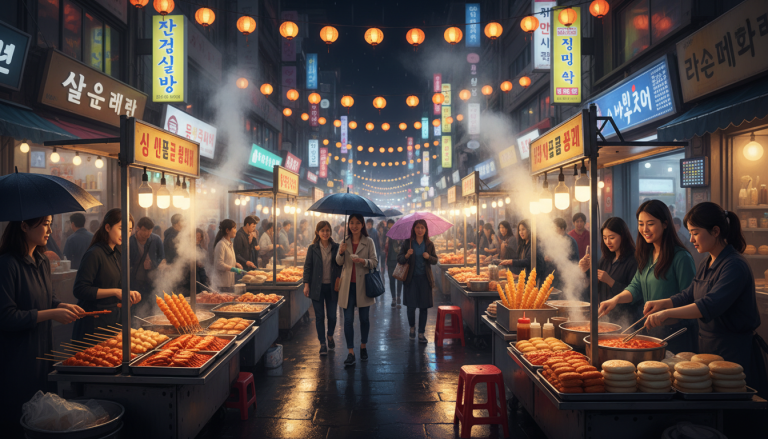
Korean street food, or Gilgeori Eumsik, is far more than a convenient snack; it is a living museum of South Korea’s rapid modernization and resilient history. For decades, street vendors have served as the backbone of the local food scene, providing affordable meals to students, office workers, and tourists alike. These stalls are not just places to eat; they are social hubs where the fast-paced life of Seoul slows down for a moment of spicy, savory, or sweet indulgence.
1. The Origins of Pojangmacha
The iconic orange-tented wagons known as Pojangmacha first emerged in the early 1950s in Seoul. Following the Korean War, these mobile stalls provided a vital source of income for many and offered cheap, hot food to a population in recovery. Today, they remain a nostalgic symbol of Korean nightlife, often serving as the setting for dramatic heart-to-hearts in popular K-dramas.
2. Tteokbokki: From Royalty to the Streets
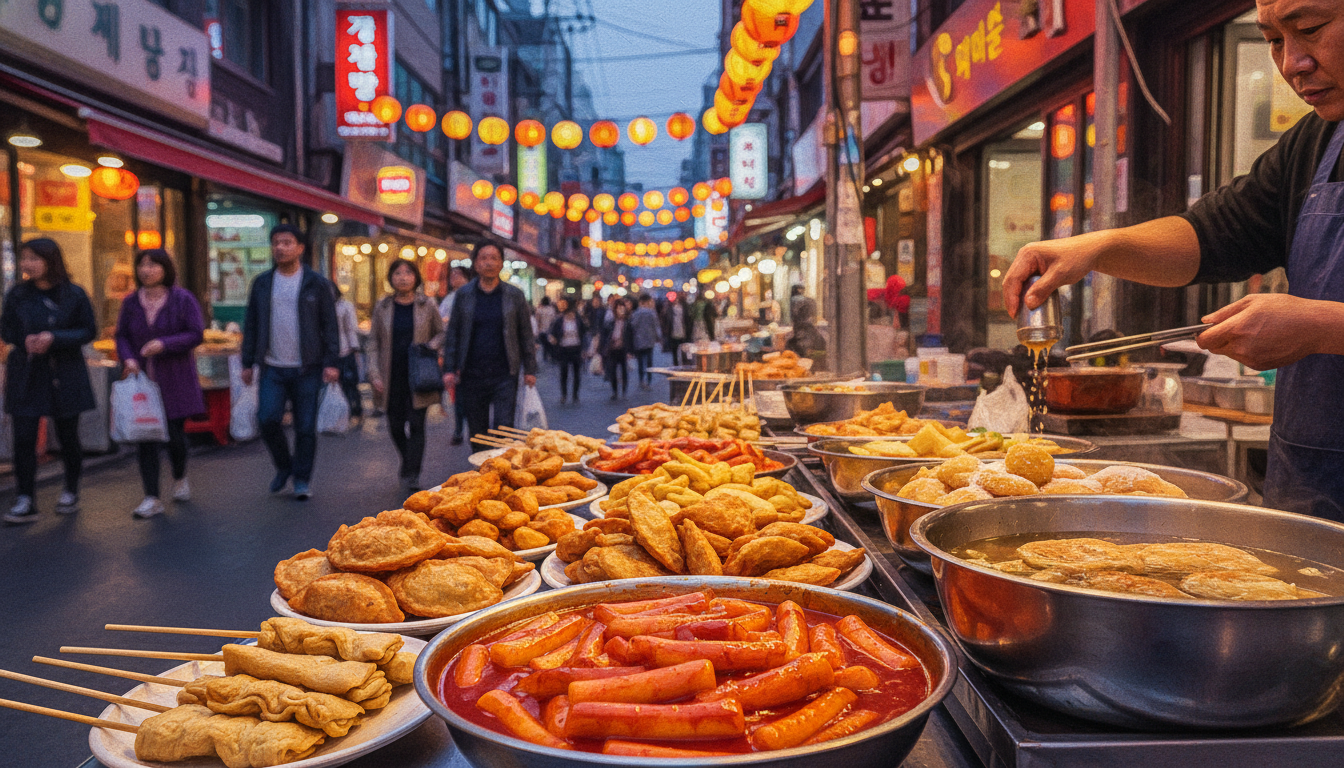
While Tteokbokki (spicy rice cakes) is now the quintessential street food, its ancestor, Gungjung Tteokbokki, was a soy-sauce-based dish served to the royal court during the Joseon Dynasty. The spicy, gochujang-based version we love today only became popular in the 1950s, thanks to a woman named Ma Bok-rim who accidentally dropped rice cakes into a spicy sauce at a Chinese restaurant.
3. The Art of the Free Broth
One of the most beloved aspects of Korean street food culture is the Eomuk-tang (fish cake soup) ritual. When you buy a skewer of fish cakes (Odeng), you are almost always entitled to unlimited cups of the savory, hot broth. It is a social unspoken rule that you can help yourself to the broth using a small plastic cup or a ladle, especially during the freezing winter months.
4. Winter vs. Summer Specialties
Street food in Korea is highly seasonal. During the winter, the streets are filled with the aroma of Bungeo-ppang (fish-shaped pastry with red bean filling) and Hotteok (sweet syrupy pancakes). In contrast, summer brings vendors selling ice-cold treats, fresh fruit cups, and chilled noodles, proving that the street food scene adapts perfectly to Korea’s extreme climate changes.
5. The Global Influence of Mukbang
The rise of Mukbang (eating broadcasts) has catapulted Korean street food onto the global stage. Creators filming themselves consuming massive quantities of cheesy corn dogs or spicy rice cakes have created a worldwide demand for these snacks, leading to the opening of Korean street food stalls in cities from New York to London.
6. Myeongdong: The Modern Street Food Mecca
While traditional markets offer authentic flavors, the Myeongdong Shopping District has evolved into a laboratory for fusion street food. Here, you can find innovative snacks like grilled lobster with cheese, rose-shaped ice cream, and the famous 32-centimeter tall soft-serve cones that challenge the laws of gravity.
7. The Evolution of the Korean Corn Dog
The Korean version of the corn dog has become a viral sensation. Unlike the standard American version, Korean corn dogs are often coated in sugar, filled with mozzarella cheese, and encrusted with diced potatoes or even ramen noodles. This K-Corn Dog phenomenon highlights the Korean knack for taking a simple concept and adding layers of texture and flavor.
8. Gwangjang Market’s Historical Significance
Established in 1905, Gwangjang Market is one of the oldest and largest traditional markets in Korea. It is famous for its ‘Food Alley,’ where elderly vendors have been perfecting dishes like Mayak Gimbap (addictive seaweed rice rolls) and Bindaetteok (mung bean pancakes) for decades, preserving the authentic taste of the past.
9. The Role of Street Food in K-Dramas
Street food stalls are frequently used as narrative devices in K-Dramas to signify a character’s humility or to foster romantic tension. Whether it is the lead couple sharing a skewer of fish cakes or a protagonist drinking Soju at a Pojangmacha after a long day, these scenes have made street food an aspirational experience for international fans.
- 10. Gyeran-ppang: A sweet and salty egg bread that is a popular breakfast on the go.
- 11. Sundae: Blood sausage that is a staple for those seeking traditional, earthy flavors.
- 12. Dak-kkochi: Grilled chicken skewers glazed in sweet and spicy sauces.
- 13. Sotteok Sotteok: A modern skewer alternating between sausage and rice cakes.
14. Hygiene and Modernization
In recent years, the South Korean government has implemented stricter hygiene regulations and licensing for street vendors. This has led to cleaner stalls and even the introduction of cashless payment systems via QR codes, making the street food experience more accessible and safer for international tourists.
15. The Social Equalizer
In Korea, street food acts as a social equalizer. It is common to see a high-ranking businessman in a tailored suit standing next to a college student, both enjoying the same 3,000-won bowl of Tteokbokki. The lack of formal seating and the communal nature of the stalls break down social hierarchies.
16. Regional Variations: Busan’s Ssiat Hotteok
Street food isn’t just a Seoul phenomenon. In Busan, the Ssiat Hotteok is a local legend. Unlike the standard version, this pancake is stuffed with a variety of seeds and nuts after being fried, offering a crunchy texture that is unique to the southern coast.
17. The Visual Appeal: ‘Insta-worthy’ Snacks
Modern vendors focus heavily on the visual presentation of their food. From Rainbow Cotton Candy to Tornado Potatoes (hollowed-out spiral-cut potatoes on a stick), the aesthetic appeal is designed to be shared on social media, driving further foot traffic to the stalls.
18. The Importance of Texture (Chewy is Key)
A recurring theme in Korean street food is the obsession with ‘Chewy’ or ‘Q’ texture. Whether it is the elasticity of rice cakes or the pull of melted mozzarella, the mouthfeel is often considered just as important as the flavor profile itself.
19. Night Markets and Youth Culture
The Bamdokkaebi Night Market is a seasonal event that showcases the fusion of traditional food and youth-driven food truck culture. These markets often feature live music and handmade crafts, positioning street food as part of a broader cultural lifestyle movement.
20. Street Food as a Gateway to Korean Language
Many foreigners find that street food stalls are the best places to practice basic Korean. Phrases like ‘Ol-ma-ye-yo?’ (How much is it?) and ‘Man-hi ju-se-yo’ (Please give me a lot) are commonly used and warmly received by the ‘Ajummas’ (older women) running the stalls.
- 21. Mandu: Steamed or fried dumplings filled with meat and vegetables.
- 22. Twigim: Deep-fried snacks ranging from squid to sweet potatoes.
- 23. Japchae: Stir-fried glass noodles often served in small portions at markets.
- 24. Pajeon: Savory green onion pancakes that are best enjoyed on rainy days.
25. The Ritual of Standing and Eating
Unlike many Western cultures where eating while walking is common, the traditional way to enjoy Korean street food is to stand at the stall. This allows you to interact with the vendor, enjoy the food while it is piping hot, and dispose of your trash properly in the vendor’s bin.
26. Creative Use of Ingredients
Korean vendors are masters of repurposing ingredients. For example, Nurungji (scorched rice) is often turned into sweet crackers, and leftover vegetable scraps are frequently used to create the rich, deep flavors of the communal broth pots.
27. The Influence of International Flavors
Korean street food is constantly evolving by absorbing international influences. You will now find Churros, Takoyaki, and Turkish Kebabs integrated into the local street food scene, often with a uniquely Korean twist, such as adding kimchi or spicy mayo.
28. A Symbol of Resilience
Ultimately, the persistence of street food in the face of massive shopping malls and high-end restaurants is a testament to the Korean spirit. It represents a connection to the past, a celebration of the present, and a delicious, ever-changing landscape that continues to captivate the world’s palate.