Understanding Chuseok: The Heart of Korean Heritage
Chuseok, often referred to as the Korean Thanksgiving, is arguably the most significant and celebrated traditional holiday in South Korea. Falling on the 15th day of the 8th month of the lunar calendar, it coincides with the autumn equinox and the appearance of the full harvest moon. This three-day celebration is a time for family reunions, honoring ancestors, and expressing gratitude for the year’s harvest. In this article, we explore 24 fascinating facts that define this vibrant cultural pillar.
1. The Origin of the Name
The word ‘Chuseok’ literally translates to ‘Autumn Eve.’ It is also known as Hangawi, a term derived from the archaic Korean words for ‘great’ and ‘middle,’ signifying the great middle of autumn. This reflects the holiday’s position as the peak of the harvest season when the moon is at its brightest and most beautiful.
2. Ancient Roots in Gabae
Historical records suggest that Chuseok originated from Gabae, a weaving contest held during the Silla Dynasty. According to the Samguk Sagi, the king organized a month-long competition between two teams of women. The team that wove more cloth by the 15th day of the 8th lunar month won and was treated to a feast by the losing team, establishing the festive spirit of the holiday.
3. The Ritual of Charye
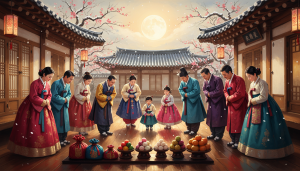
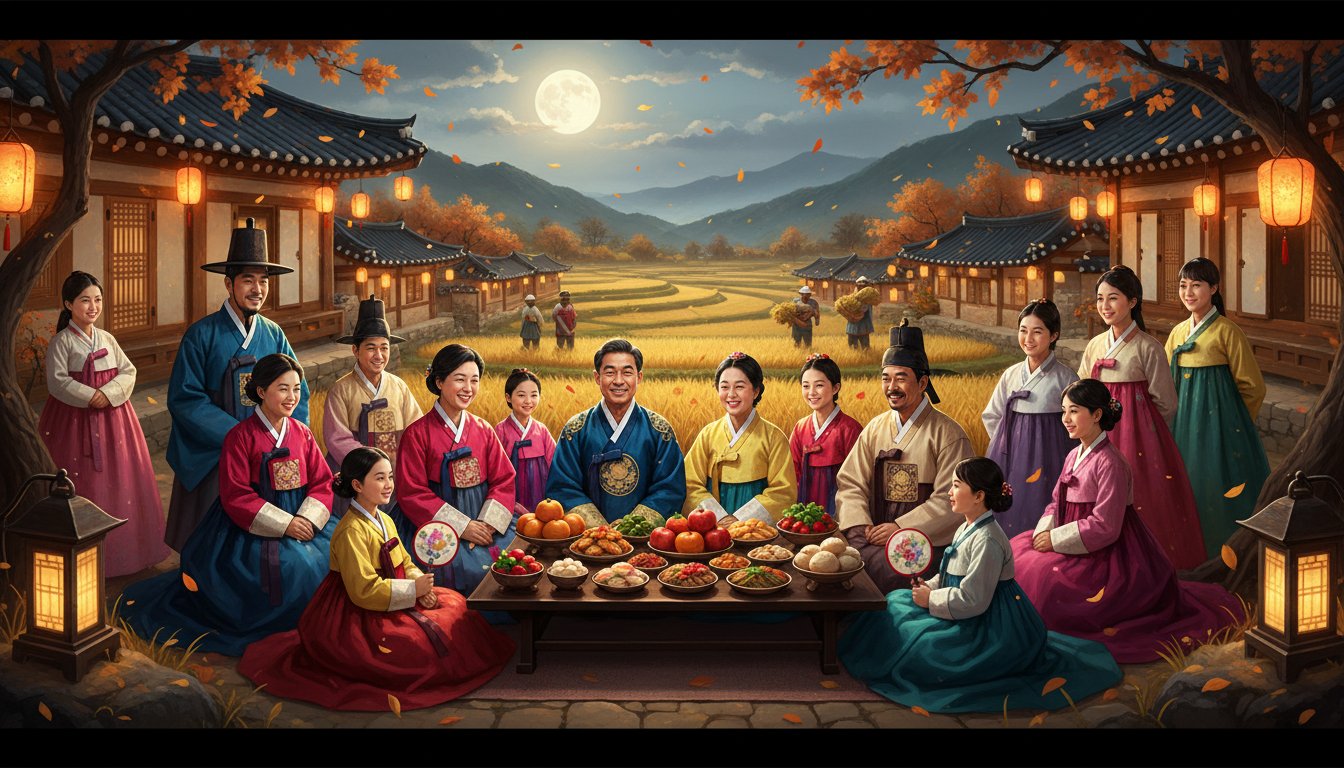
One of the most vital aspects of Chuseok is Charye, the ancestral memorial service. Families gather early in the morning to prepare a table laden with newly harvested rice, alcohol, and various traditional foods. This ritual is a formal way of showing respect and gratitude to ancestors for their protection and the bounty of the harvest.
4. Seongmyo and Beolcho
During the Chuseok period, families perform Seongmyo, which involves visiting the graves of their ancestors. This is accompanied by Beolcho, the act of clearing weeds and tidying the area around the burial mounds. It is considered a serious duty and a sign of filial piety, showing that the family still cares for their departed loved ones.
The Culinary Delights of the Harvest
5. The Iconic Songpyeon
No Chuseok celebration is complete without Songpyeon. These are half-moon-shaped rice cakes made from the year’s first harvest of rice. They are typically stuffed with sweet fillings like sesame seeds, honey, red bean paste, or chestnuts, and steamed over a bed of pine needles, which gives them a distinct fragrance and prevents them from sticking together.
6. The Legend of the Half-Moon
The shape of Songpyeon carries deep symbolism. Koreans believe that the half-moon shape represents a bright future or growth, whereas a full moon represents a cycle that is beginning to wane. There is also a popular folk belief that the person who makes the prettiest Songpyeon will have a beautiful daughter or find a handsome spouse.
7. Savory Jeon (Pancakes)
Jeon, or Korean savory pancakes, are a staple on the Chuseok table. These are made by coating various ingredients—such as zucchini, fish, shrimp, or minced meat—in flour and egg wash before pan-frying them. The variety of colors and flavors symbolizes the abundance of the season.
8. Torantang: The Autumn Soup
Torantang, or taro soup, is a seasonal delicacy often served during Chuseok. Taro is rich in nutrients and is believed to aid digestion, which is particularly helpful given the large amount of food consumed during the festivities. It is often cooked in a beef brisket broth with seaweed or tofu.
9. Traditional Alcohol: Baekju
Liquor plays a central role in the Charye ritual. Traditionally, families brew their own Baekju (white wine) using the newly harvested rice. This ‘new wine’ is first offered to the ancestors before being shared among the family members during the feast.
Traditional Games and Entertainment
10. Ganggangsullae Dance
The Ganggangsullae is a UNESCO-recognized traditional dance performed under the full moon. Women dressed in Hanbok (traditional clothing) join hands to form a large circle, singing and dancing in a clockwise direction. Historically, it was used as a military tactic to make the enemy believe the Korean forces were much larger than they actually were.
11. Ssireum: Korean Wrestling
Ssireum is a traditional form of wrestling that takes place during major festivals. Two contestants grab each other’s satba (fabric belt) and use strength and technique to force any part of the opponent’s body above the knee to touch the ground. The winner of the Chuseok tournament was traditionally awarded a bull, a vital asset for farming.
12. Juldarigi (Tug-of-War)
Village-wide Juldarigi matches were common in the past. These weren’t just for fun; they were communal rituals believed to predict the success of the upcoming year’s crops. The ropes used were often massive, requiring hundreds of people to pull from both sides.
Modern Traditions and Societal Impact
13. The Great Mass Exodus
Modern Chuseok is famous for the ‘Gwi-gyeong’ or the mass exodus of people from major cities like Seoul to their hometowns. This results in some of the worst traffic jams of the year, with highways turning into parking lots. Train and bus tickets are often booked months in advance within minutes of going on sale.
14. The Gift-Giving Culture
Gift-giving is a major part of the holiday. In modern Korea, people exchange gift sets containing everything from high-quality fruits and Hanwoo (Korean beef) to practical items like cooking oil, shampoo, and even canned Spam. Spam gift sets are surprisingly popular and considered a premium gift in South Korea.
15. The ‘Chuseok Stress’ Phenomenon
While a time for family, the holiday can be stressful. ‘Myeongjeol-jeunghugun’ (Holiday Syndrome) refers to the physical and mental exhaustion experienced by family members—traditionally women—who must spend days preparing massive amounts of food and hosting relatives.
16. The Rise of ‘Hon-cho’
A growing trend among younger Koreans is ‘Hon-cho’ (a portmanteau of ‘Honja,’ meaning alone, and Chuseok). Many young people choose to spend the holiday alone, catching up on sleep or hobbies, rather than dealing with the stress of travel and the pressure of family questions about marriage or employment.
17. Traveling Abroad
With Chuseok providing a long break (often extended by weekends), many Koreans now use the time to travel internationally. Airports reach record capacities as families opt for vacations in Japan, Southeast Asia, or Europe instead of traditional ceremonies.
18. Hanbok: Traditional Attire
While not as common for everyday wear, many Koreans still wear Hanbok during Chuseok, especially children and those performing the Charye rituals. The vibrant colors and elegant lines of the Hanbok add to the festive atmosphere of the holiday.
19. Television Specials: ISAC
For those staying at home, television networks air special programming. One of the most famous is the Idol Star Athletics Championships (ISAC), where K-pop idols compete in various sports. It has become a modern Chuseok tradition for fans of all ages.
20. The Full Moon Wish
Koreans believe that the full moon on Chuseok night has special powers. It is a common tradition to look at the moon and make a wish. People believe that if they see the moon clearly, their wish is more likely to come true.
21. Economic Impact
Chuseok is a massive driver for the Korean economy. Retailers see a huge spike in sales due to gift-giving and food purchases. Conversely, many small businesses and restaurants close during the three-day period, making cities like Seoul unusually quiet.
22. Chuseok in North Korea
Chuseok is also celebrated in North Korea, though the emphasis is slightly different. While ancestral rites are performed, the holiday is less about commercialism and more about state-sanctioned family gatherings and honoring the revolutionary history of the nation.
23. Global Celebrations
With the global spread of the Korean Diaspora, Chuseok is now celebrated in Koreatowns worldwide, from Los Angeles to London. These events often feature public performances of traditional music and dance, allowing non-Koreans to experience the culture.
24. The Spirit of Sharing
At its core, Chuseok is about sharing. Historically, even the poorest families would try to share what little they had with neighbors. This spirit of community and gratitude remains the defining characteristic of the holiday, bridging the gap between ancient agrarian roots and the high-tech reality of modern South Korea.
Conclusion
Chuseok is more than just a holiday; it is a profound expression of Korean identity. Whether through the meticulous preparation of Songpyeon or the modern trend of solo staycations, the essence of the festival—gratitude, family, and reflection—remains unchanged. As South Korea continues to evolve, Chuseok serves as a vital link to the past, ensuring that the country’s rich cultural heritage continues to thrive for generations to come.